Be nice to whites, they need you to rediscover their humanity. ~ Desmond Tutu
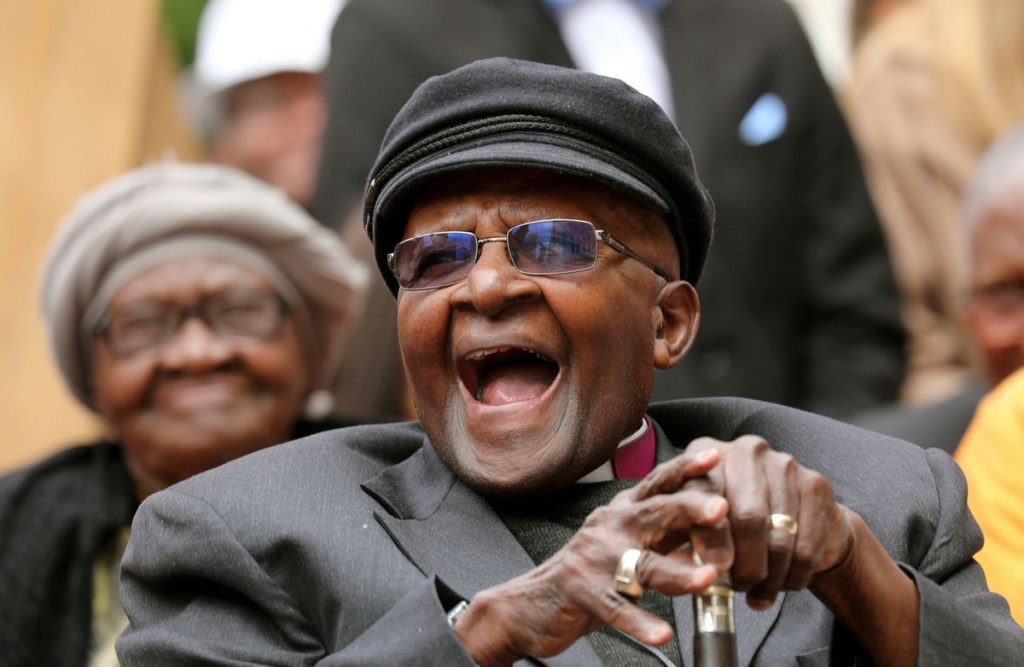
Archbishop Desmond Tutu laughs as crowds gather to celebrate his birthday by unveiling an arch in his honour outside St George’s Cathedral in Cape Town, South Africa, October 7, 2017. REUTERS/Mike Hutchings
If you are neutral in situations of injustice, you have chosen the side of the oppressor. If an elephant has its foot on the tail of a mouse and you say that you are neutral, the mouse will not appreciate your neutrality. ~ Desmond Tutu
I would refuse to go to a homophobic heaven. No, I would say sorry, I mean I would much rather go to the other place...I would not worship a God who is homophobic and that is how deeply I feel about this. ~ Desmond Tutu
When the missionaries came to Africa they had the Bible and we had the land. They said 'Let us pray.' We closed our eyes. When we opened them we had the Bible and they had the land. ~ Desmond Tutu
I have been to the Occupied Palestinian Territory, and I have witnessed the racially segregated roads and housing that reminded me so much of the conditions we experienced in South Africa under the racist system of Apartheid. ~ Desmond Tutu
For goodness sake, will they hear, will white people hear what we are trying to say? Please, all we are asking you to do is to recognize that we are humans, too. ~ Desmond Tutu
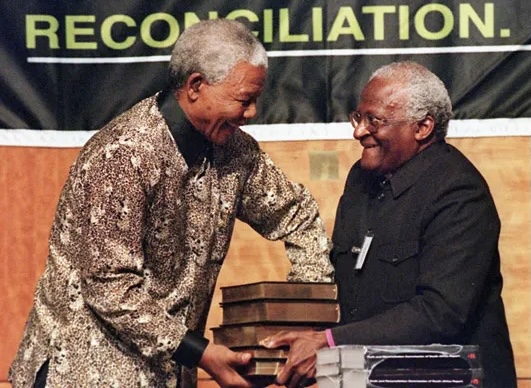
In Pretoria, South Africa, Nelson Mandela (left) receives several volumes of the final report made by the Truth and Reconciliation Commission, a group designed to repair the damage done during the apartheid, from Archbishop Desmond Tutu on October 29, 1998. Photo: WALTER DHLADHLA/AFP/Getty Images
Archbishop Desmond Tutu, the Nobel Peace prize laureate and veteran of South Africa’s struggle against white minority rule who helped end apartheid in South Africa, has died aged 90 today.
I am taking Audio storytelling for journalists: How to tell stories on podcasts, voice assistants, social audio, and beyond” from the Knight Center for Journalism in the Americas at the University of Texas at Austin. These are my notes from the first week.
“Ira Glass on Storytelling”, This American Life.
Anecdote ~ a short account of a particular incident or event, especially of an interesting or amusing nature.
Identify a niche and the community that is interested in that niche. It is most important to define who you want to serve.
There is a lot you can learn about audio storytelling by listening to a wide array of examples such as podcasts and other audio presentations.
Audio allows the audience to go at their own pace and stop and learn about a story from beginning, middle and end. Stories are about people, not things or facts. Stories that keep people’s attention have to be character-driven.
There is an inherent power that is set up by the tension having a beginning, middle, and end to a story rather than just a regurgitation of information.
Where on the path does where investigative journalism and storytelling (audio) meet? Long-form pieces, with a lot of information, need to be “entertaining.” What changed with the ascendance of narrative nonfiction and podcasting is the realization that the journalist as a “character” in a story can serve a guide or perhaps even an avatar for the reader/listener – someone to help draw them into the story.
Forms of audio storytelling:
Podcasts
Interactive newscasts on voice assistants like Alexa, Siri and Google
Interactive podcasts
Audio news
Voice computing
Audiobooks
Audio dramas “a movie in your mind.”
Social Audio (twitter spaces, club house)
Audio journals
Feedback from one another is an important way you will develop your projects and learn. Include “helpers” on your projects.
A good story is a good story from the brain’s perspective, whether it’s audio or video or text,” ays Paul Zak, the director of the Center for Neuroeconomics Studies at Claremont Graduate University.
Audio is one of the most intimate forms of media because you are constantly building your own images of the story in your mind.
Like reading, listening to audio allows people to create their own versions of characters and scenes in the story. – Emma Rodero, a communications professor at the Pompeu Fabra University in Barcelona
Building a story with Anecdotes ~ this happen, then this happened, and then this…one leading to next leading to the next. Sequence of events. Start with the action.
Raise the questions for the beginning. Constantly raise questions and answer them. Moment of reflection – here is why you are listening to my story. Tell something new that supports the Anecdote.
Best podcasters are those who a/ pre-interview and get a good grip on the subject and the person and b/ still make it sound spontaneous in the show.
Pre-interviews: First, if possible have someone other than the interviewer do the pre-interview and then give notes or a briefing to the interviewer. This way the guest will be telling their story for the first time to the interviewer. Second, the pre-interviewer is trying to do three things 1) make sure the guest is a good talker that is interesting to listen to 2) make sure the guest knows the topic you want to talk about and 3) to be on the look out for “hot zones” where there is a good story or an emotional story lurking, but they don’t actually go too deep in probing those zones…they are just trying to find the places where the interviewer should dig.
The technical aspects become second nature with practice. Learn how to record good tape.
Interviewing:
Be clear what it is you want to achieve in the interview
Plan out a story arc and progression of topics.
Ask different types of questions designed to get them to tell a story
Be clear what it is you want to achieve in the interview
Plan out a story arc and progression of topics.
Ask different types of questions designed to get them to tell a story
Play attention to what your are connected to. What captivates you? Amuse yourself with your stories. “I am my primary audience.”
Descript software: You can type into it, talk into it, and the ease by which you can move blocks of audio as easily as you move blocks of text. https://www.descript.com/
Great storytelling captures our imaginations. Good stories are interesting for a reason.
Who are you talking to? What do you want the listener to learn? What should they care? Who do you want to listen? What is your end project?
Good audio interview is a story, a story that has a beginning, a middle and an end, and a good interviewer is going to try to create a dramatic arc.
When YOU are interviewed: First, who is the audience for this podcast or radio show? Second, what is the focus of the interview they want to do with you? What part of the story are they looking for you to tell? How long do they expect the segment to be like? Are they talking to other people to round out the perspective? Prepared to talk about the three to five things you most want a listener to know related to the focus of the interview and truly have talking points ready. Keep it concise. Let your interviewer ask follow up questions if they want more detail but really know which talking points are your priority and make sure you speak to them. Also, do you have anecdotes that illustrate the key points from your story?
Hero’s quest:
What were you setting out to do?
Who did you meet along the way?
What trials and tribulations occurred?
What did you ultimately discover?
What wisdom can you now impart to us?
Design Thinking: Anyone who creates anything is a designer. Who is it for? How is it going to benefit those people? What are the other things out there that maybe like this that people would be going to instead? And how is my thing different?
Sometimes the most powerful sound in stories is a lack of sound or a pause or a silence or a cadence of the way we speak in person, which you can’t really get when you’re reading print.
The Questions
Who are you going to be talking to?
What did they get out of listening?
What is it that you’re actually making for them?
Who is the thing you’re making for? Is it a broad swath of people or a narrow slice with a specialized interest?
What are your listeners doing while they’re listening? Are they multitasking and doing chores, or are they closing their eyes and listening deeply?
Do they know a lot about the subject area you’re going to be presenting or are they new to it?
What do they get out of listening (This is the why should someone care question. )
What is compelling about the thing you want to tell a story about?
Is it just a great tale? Or is there actionable information that you’re sharing?
What value does a person get from listening to your story?
Does your story or project help someone understand how to lead a better life?
Does it help someone make sense of something in the world that’s confusing or perplexing?
Does it help your listener feel a part of something bigger than them?
What is your story really about?
At the end of listening, what will the listener take away?
What is it about your story that I’m going to find worth investing my time in?
What is it that you’re making?
Audio has fewer barriers than some of the more expensive media to make. There’s always been a sort of democratization of the storytelling through audio because anyone could go out and get a recorder and a microphone, and now anyone can make a podcast and publish it. It is accessible, both to listen to and to make stories. It is a nimble medium. You can pause, you can stop, you can come back to it, you can listen again.
Audio stories are becoming more interactive, so people can respond. Some stories have Twitter accounts for the fictional characters that you can follow along with. The writers drop clues in the episode, so you can follow along and solve the mystery as you’re listening.
Listen to as much as you can get your ears on. You can learn simply by taking in all kinds of stories and write about what it was about those stories that worked or didn’t work. Remain open to new forms. Explore around the margins of what you love and see where that takes you.
listen little sister
angels make their hope here
in these hills
follow me
I will guide you
careful now
no trespass
I will guide you
word for word
mouth for mouth
all the holy ones
embracing us
all our kin
making home here
renegade marooned
lawless fugitives
grace these mountains
we have earth to bind us
the covenant
between us
can never be broken
vows to live and let live
Bawse is a human being who exudes confidence, turns heads, reaches goals, finds inner strenght, gets hurt efficiently and smiles genuinely- because they’ve fought through it all and made it out the other side. The double-handed praise was created for them. In a bawse world there are no escalators, there are only stairs.
The 50/30/20 rule budget is a simple way to budget. You spend 50% of your after-tax pay on needs, 30% on wants, and 20% on savings.
Your principles are no good if they don’t get exercised.
Time is one commodity that we can’t hoard for another day. We can’t control the rate of the spend of time, we can only control how we spend it.
Be more intentional about doing something to improve yourself every day.
Photo by Robin Sallie taken at the Saad home in Wilmington, Delaware on Saturday, November 27, 2021.
“Every day is player development day.” — Dr. Ron Sen
“15 minutes a day, every day makes a habit for change. You build a momentum, and that can carry over to other activities. Suddenly, you look at things like scrolling through social media, or mindlessly watching TV with a new critical eye.” – Mary Stevens
“15 minutes is attainable today, and when repeated over time momentum and a significant amount of change can happen. It isn’t magic, just intentional effort, repeated day after day.” – Mary Stevens
You are worth 15 minutes every day. Seize that time to do something for yourself, that isn’t being selfish, you are building a new you.
What methods do you use to generate high-quality conversations?
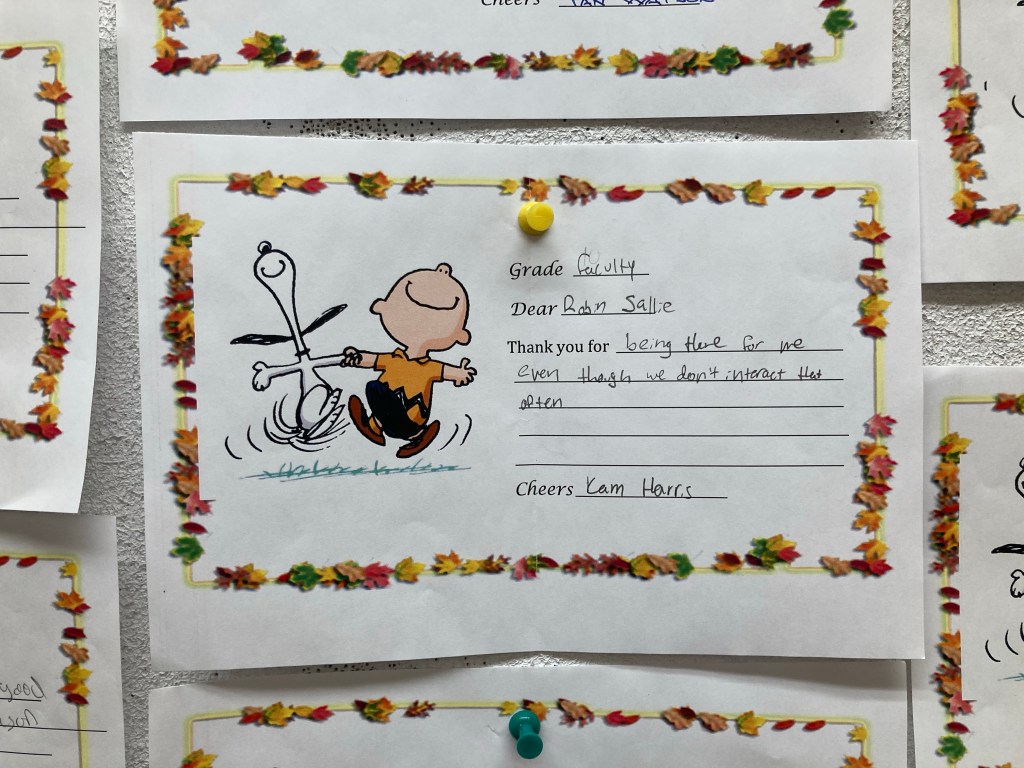
The benefits of feeling and expressing gratitude are that you savor positive experiences, become more resilient in the face of stress, improve your physical and mental health and increase the self-worth of others.
Michael Phelps trains in the dark. When his goggles failed at key event, he soldiered on, because not seeing is his default state.
Have an opinion and take a stand. This is more difficult than it seems because it means you need to know enough and be committed to your opinion.
Do not pass your business cards out with absolutely no conversation. You have to make a connections for your card to mean anything.
Quality always lasts and retains value. A little bit of a good thing is better than a lot of rubbish.
Use headlines to catch the attention of anyone that reads it, draw them in to read the first sentence of your story.
People are more willing to share their professional and personal experiences when the other party understands their background.
Businesses need to genuinely integrate gender equality into their company values and culture.
Biases are not easy to break.
People on the spectrum, of which there are many among us, get overstimulated by socializing. It’s not enough to want to be able to do it. Prioritizing won’t change their brain. Tim Merrick
ambivert /ˈambəˌvərt/ a person whose personality has a balance of extrovert and introvert features.
in·ter·sti·tial /ˌin(t)ərˈstiSHəl/ of, forming, or occupying interstices. pertaining to or situated in an interstice, ECOLOGY. (of minute animals) living in the spaces between individual sand grains in the soil or aquatic sediments. 1640s, from Latin interstitium “interval”
in·ter·stice /inˈtərstəs/. noun an intervening space, especially a very small one.
“I cannot make you understand. I cannot make anyone understand what is happening inside me. I cannot even explain it to myself.” ― Franz Kafka, Metamorphosis
Coaching is not psychotherapy or counseling. One of the most obvious differences is that therapy tends to focus on feelings and experiences related to past events, whereas coaching is oriented towards goal setting and encourages the client to move forward. A coach works with a functional person to get them to become exceptional. A coach works with people who are already emotionally healthy to move them to magnificent levels. Coaching does not rely on past issues for achieving growth, but rather focuses on goals towards the future. Coaching is action oriented. The focus is on where the client is right now, where they want to be next, and how to get them there.
“Any idiot with a whistle can coach.” – Anonymous Parental Rant
“Being good at leaving is a success accelerator. Leaving jobs, leaving relationships, leaving the room, leaving conversations.” Sekai Farai @SekaiFarai
What is your winning plan? Can an impartial observer identify it?
Each of us has different values and priorities. The notes above — collected by Dr. Ron Sen —come from Malala Yousafzai’s MasterClass on advocacy. She finds them vital to pursuing her mission of promoting education for girls.
“A lot of people say they want to be great, but they’re not willing to make the sacrifices necessary to achieve greatness. They have other concerns, whether important or not, and they spread themselves out. That’s totally fine. After all, greatness is not for everybody.” — Kobe Bryant
“There is no one out there, no actor on the stage of society, who can or will bring about the radical transformation required to save humanity and the world – no one that is except We the People. There is no one else who will do it for us, and it is a job that must be done.” – Richard Moore, Escaping the Matrix
You are worth so much more than your productivity.
Redlining was part of a series of racist policies instituted in federal and local government agencies that trapped Black and brown people in low-income neighborhoods.
The Home Owners’ Loan Corporation (HOLC) and Federal Housing Administration (FHA) created color-coded maps that assigned “mortgage security” grades to residential neighborhoods. These maps, which determined who received mortgages, identified predominantly Black and immigrant neighborhoods as red or “hazardous,” preventing homeownership and creating lasting disinvestment in neighborhoods of color (Mapping Inequality).
The legacy of redlining continues to play a significant role in the racial inequality in housing, the lack of generational wealth and class mobility, and the overall quality of life for Black people (Teen Vogue).
An independent press is critical to democracy.
Health is wealth.
One of the great myths of our culture of toxic productivity is that working more always leads to a better result.
Play more, work less. Fewer expenses, less income. It’s all about balance.
Aesthetic of work: if you make something that forces people to acknowledge how much time and effort it took to create, they would inherently prescribe greater value to it.
Photo by Robin Sallie on November 26 in Greenville, Delaware.
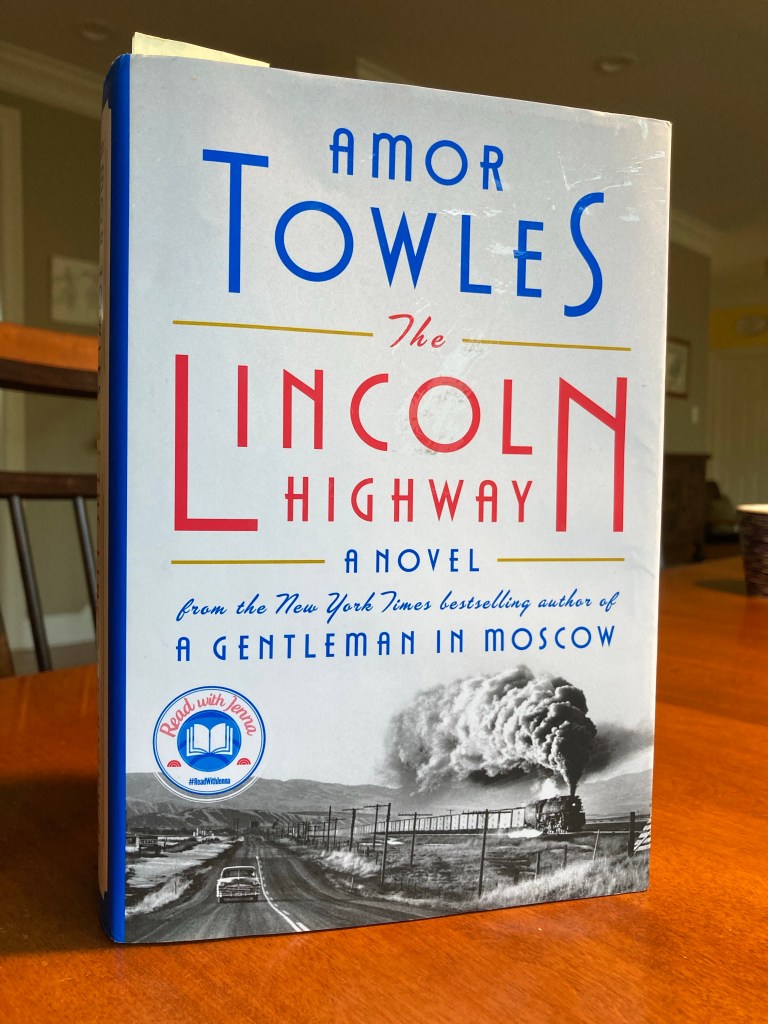
The Lincoln Highway, a Great American Road Novel by Amor Towles — three 18-year-olds who met in a juvenile reformatory, plus a inquisitive, abnormally smart 8-year-old — journey from Nebraska to New York City in an old Studebaker and is set in 1950’s America. This is a period of peace, prosperity, and upward mobility in the US; a period in which television was in its infancy, and which came just before the advents of rock & roll, the modern civil rights movement, and the “sexual revolution”.
Emmett Watson is driven home to Nebraska in June 1954 by the warden of the juvenile work farm where he has just served fifteen months for involuntary manslaughter.
His mother gone for eight years, his father recently deceased, and the family farm foreclosed upon by the bank, Emmett’s intention is to pick up his little brother, Billy, and head to California where they can start their lives anew.
But when the warden drives away, Emmett discovers that two friends from the work farm have hidden themselves in the trunk of the warden’s car. Together, they have hatched an altogether different plan for Emmett’s future, one that will take them all on a fateful journey in the opposite direction—to the City of New York.
Spanning just ten days and told from multiple points of view, the novel provides an array of new and richly imagined settings, characters, and themes. Each character is the central protagonist of their own ongoing adventure that is both unique and universal. Nothing goes as Emmett intended, but novels wouldn’t be novels if everything went as planned.
The book is about the act of storytelling and mythmaking and probes questions about how to structure a narrative and where to start; its chapters count down from Ten to One as they build to a climax. Spine of the novel is Billy’s obsession with a big red alphabetical “compendium” of 26 heroes and adventurers — both mythical and real — from Achilles to Zorro, though the letter Y is left blank for You (the reader) to record your own quest.
Bil·dungs·ro·man /ˈbildo͝oNGzrōˌmän/ a novel dealing with one person’s formative years or spiritual education.
“Well, that’s life in a nutshell, ain’t it? Lovin’ to go to one place and havin’ to go to another.” — The panhandler
Eris (/ˈɪərɪs, ˈɛrɪs/; Greek: Ἔρις Éris, “Strife”) is the Greek goddess of strife and discord.
in medias res — in the middle of the thing
600 pages only covers 10 days.
pa·nache /pəˈnaSH,pəˈnäSH/ flamboyant confidence of style or manner or (HISTORICAL) a tuft or plume of feathers, especially as a headdress or on a helmet. From Latin pinna: feather
chantoosie (plural chantoosies) (Canada) A woman employed to sing in a nightclub.
The Lincoln Highway is 3.390 miles long, and it’s the U.S.’s very first cross-country highway. The west end is Lincoln Park in San Francisco, CA. East end is Times Square in New York, NY.
Making a fresh start isn’t just a matter of having a new address in a new town. It isn’t a matter of having a new job, or a new phone number, or even a new name. A fresh start requires the cleaning of the slate. And that means paying off all that you owe, and collecting all that you’re due. — Duchess
Because young children don’t know how things are supposed to be done, they will come to imagine that the habits of their household are the habits of the world. If a child grows up in a family where angry words are exchanged over supper, he will assume that angry words are exchanged at every kitchen table; while if a child grows up in a family where no words are exchanged over supper at all, he will assume that all families eat in silence. —Emmett
haus·frau /ˈhousˌfrou/ noun a German housewife. INFORMALa woman regarded as overly domesticated or efficient.
Emmett was raised to hold no man in disdain. To hold another man in disdain, his father would say, presumed that you knew so much about his lot, so much about his intentions, about his actions both public and private that you could rank his character against your own without fear of misjudgment.
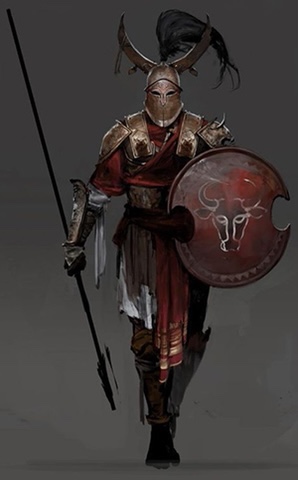
In Greek mythology, Spartoi (also Sparti or Spartae) (Ancient Greek: Σπαρτοί, literal translation: “sown [men]“, from σπείρω, speírō, “to sow”) are a mythical people who sprang up from the dragon’s teeth sown by Cadmus and were believed to be the ancestors of the Theban nobility.
The Spartoi is a legendary warrior sown and grown from a set of Dragon’s teeth. The dragon was a pet of Aries, the Greek God of War, and when sown into the group, these teeth, known as the Spartoi Seed, grew into a full grown warrior known as the Spartoi.
Wasn’t it hard enough in the course of life to distinguish between fact and fancy, between what one witnessed and what one wanted? — Emmett
in·ter·stice /inˈtərstəs /noun an intervening space, especially a very small one.
The City of New York is a thousand cities rolled into one.
Woolly’s sister, Sarah, observes to Emmett: “If you take a trait that by all appearances is a merit—a trait that is praised by pastors and poets, a trait that we have come to admire in our friends and hope to foster in our children—and you give it to some poor soul in abundance, it will almost certainly prove an obstacle to their happiness.”
$50,000 then equals $500,000 now.
pos·it. /ˈpäzət/ past tense: posited; past participle: posited. assume as a fact; put forward as a basis of argument. put in position; place. to dispose or set firmly : fix. to assume or affirm the existence of : postulate. to propose as an explanation : suggest.
postulate /ˈpäsCHəˌlāt/. suggest or assume the existence, fact, or truth of (something) as a basis for reasoning, discussion, or belief. (in ecclesiastical law) nominate or elect (someone) to an ecclesiastical office subject to the sanction of a higher authority. noun FORMAL /ˈpäsCHələt/ a thing suggested or assumed as true as the basis for reasoning, discussion, or belief. put in position; place.
Remembering vs rememorizing — Woolly
raff·ish /ˈrafiSH/ adjective unconventional and slightly disreputable, especially in an attractive manner.
deign/dān/ do something that one considers to be beneath one’s dignity. ARCHAIC condescend to give
…the troubling theory Schrödinger’s cat. In this theory, a physicist named Schrödinger had posited … that there was a cat with some poison in a box in a state of benign uncertainty. But once you opened the box, then the cat would either be purring or poisoned. So it was with a touch of caution that any man should venture to open a box, even if it was one that had his name on it. Or perhaps, especially if it had his name on it. —Woolly
visage to visage face to face
…“everything of value in this life must be earned.” — Ulysses
gyre /ˈjī(ə)r/ verb LITERARY whirl or gyrate. noun a spiral or vortex.
“When it comes to waiting, has-beens have had plenty of practice.” And, there’s “that’s what has-beens do: They wait.” I believe that Towles is making a bigger point about people being the authors of their misfortune by waiting for good things to happen as opposed to doing.
From a Forbes review by John Tammy: “Towles writes Emmett, Duchess and Woolly as though their work-camp misfortune was all the doing of others. Such is the prerogative of fiction novelists, they get to shape the characters in the way they like, but his drawing of them deprived Highway of believability. Realistically there’s no story if Emmett’s a really bad person who had purposely killed someone, but seemingly no one in Highway is at fault at which point we should all be so lucky to be sent off to a work camp filled with such interesting, articulate, and (in Woolly’s case) well-bred inmates. Everyone in Highway is abnormally perceptive, well read, and talented, including those at Salina.”
Are Emmett, Duchess, and Woolly victims of simple bad luck?
I hated the ending. The characters are unrealistic. And I was not expecting so many people to die by murder and suicide. None of the violence was graphic. I still recommend the book. It is an easy read with plenty of cliffhanger chapter endings.
One of my goals is to teach someone else all I learn about digital storytelling. This school year I have been teaching my work sibling ~ BT ~ so he can pass the lessons on to his 7th graders in his media literacy class. Every student in our school, an independent school that services grades 6th through 12th, is issued an Apple IPad Air that is loaded with software.
First I taught BT WordPress. It will be a digital portfolio of his class projects. Once blogging becomes a habit, BT may also publish lesson plans, a class podcast, academic writings around media literacy in middle school and various life lessons.
Next BT did three assignments using the free version of InShot which is full of advertisements. He created a still photo gallery with collected sound detailing his love of water, a digital story using still photos, video and sound of the first football game of the season and a sound story / podcast about scuba diving.
The advertisements in InShot distract, frustrate and slow down the process. After talking to the school techs, BT decided that he would rather use Adobe Premier Rush. Our school owns a license.
Neither of us had used the application. I spent about an hour figuring this out. One thing that I love applications built for Apple mobile devices is the uniformity. If you can figure out the first one, you are not far from figuring out the next one.
BT wanted make a Vlog such as this one, made by a classmate, Ji Ji Marie, in a digital storytelling class taught by Stacey Patton. She used the free InShot application. Notice the watermark in the lower, right corner. I love her presentation and used as an example for BT of the possibilities for his class.
So I made myself a quick and dirty training video so I could show BT how to make his training video so he can show his class how to made a Vlog using the Picture in Picture feature. It is rough and ugly. I did check the Rush page for tutorials.
I love being a substitute teacher for middle school students. Today’s 8th grade Intro to Physical Science class had a Canvas issue and could not log in to the system to complete the assignment that their teacher left for them. I had to go to plan B — a logic puzzle.







 Relentless Robin