

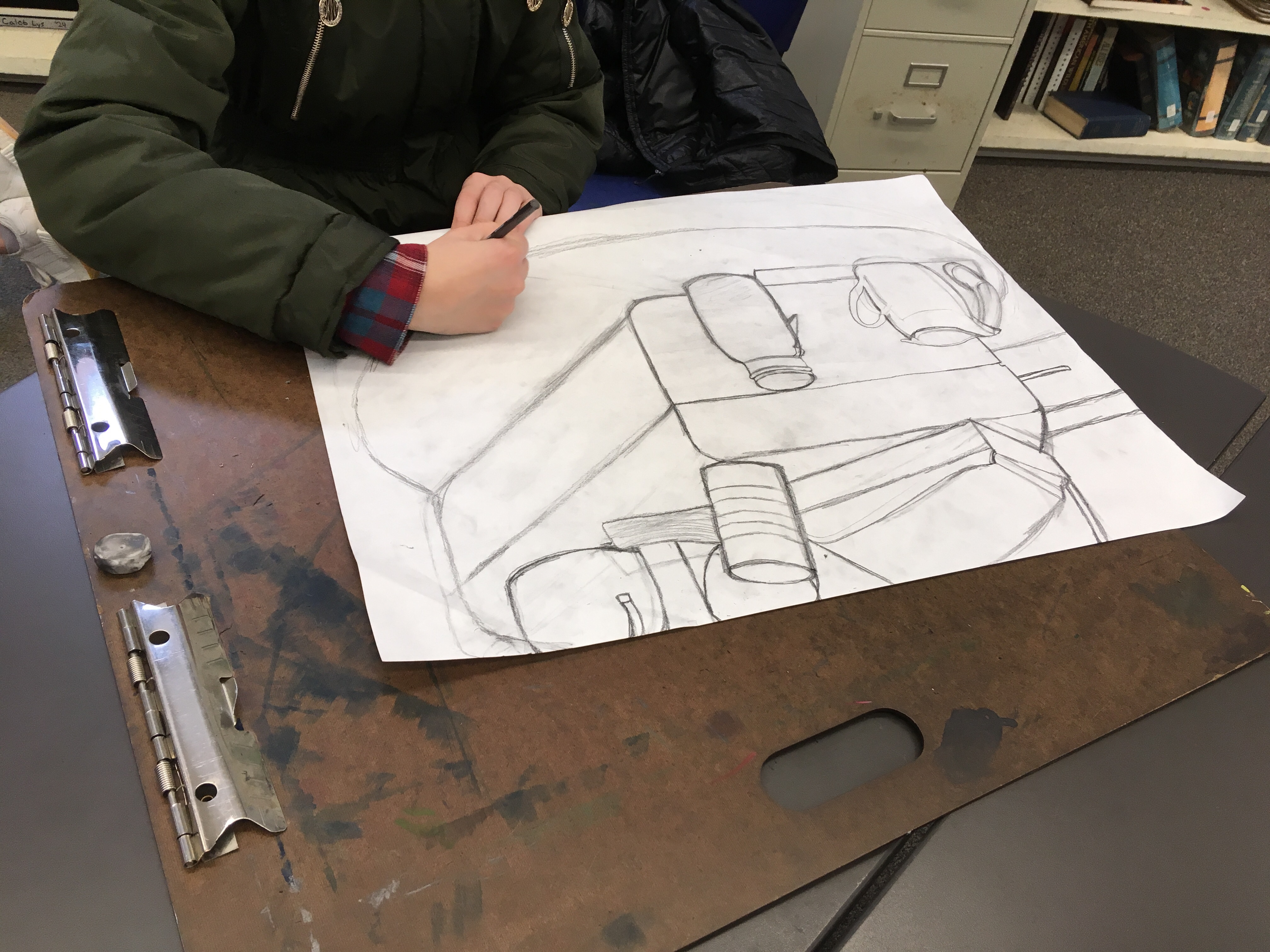
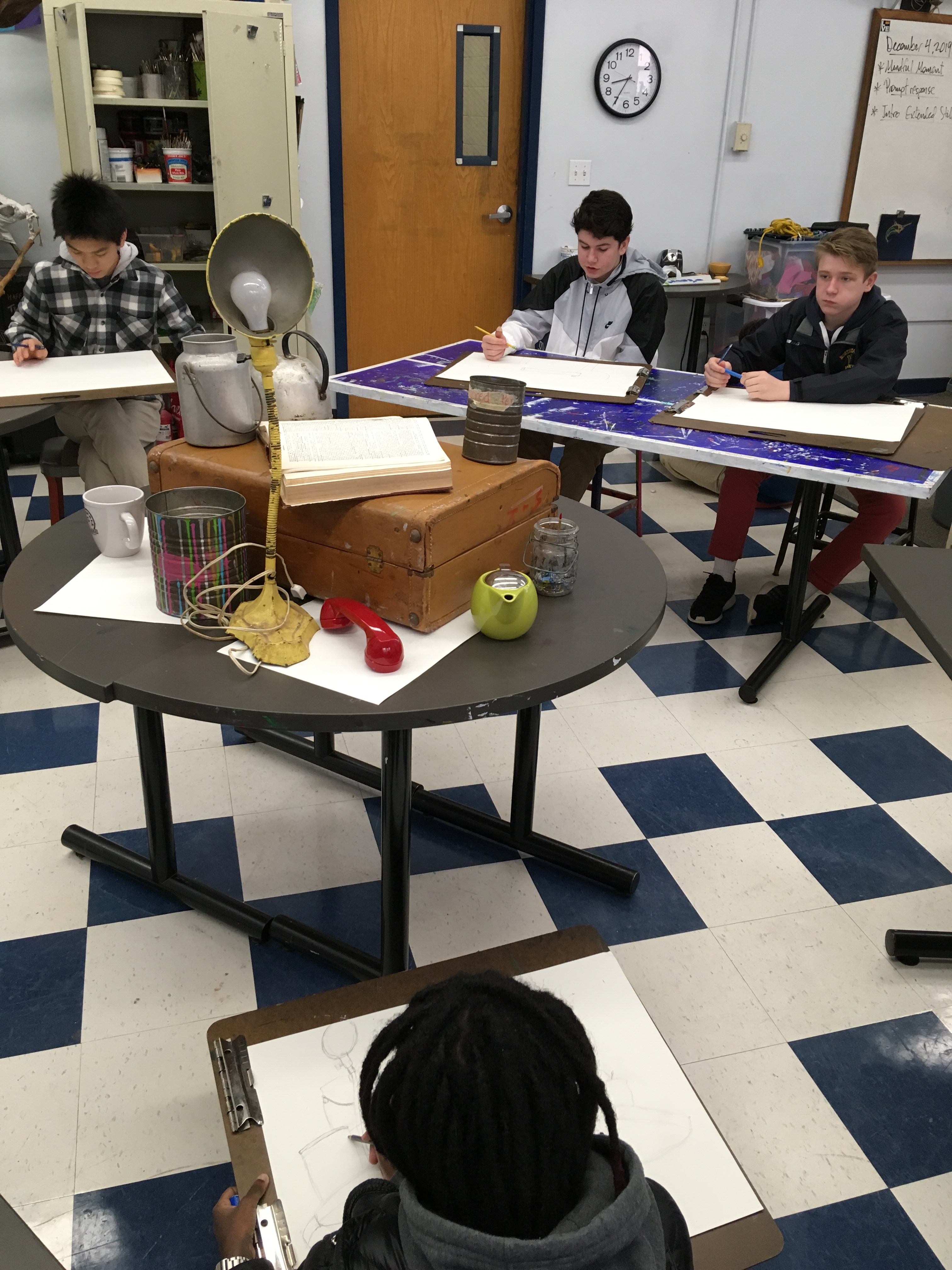
This week 8th graders started working on an extended time still life.
They will —for the first time — be required to put 8 hours into the same graphite drawing while learning to find a point of view, add details and hit at least 5 different values.
This week 8th graders started working on an extended time still life.
They will —for the first time — be required to put 8 hours into the same graphite drawing while learning to find a point of view, add details and hit at least 5 different values.


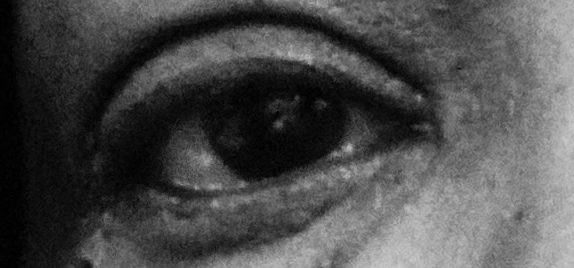
The 7th graders at my school are doing graphite selfies using a grid. They were photographed wearing sun glasses.
The assignment is to created something colorful in the lens that shows their personality.

On days that I have small pockets of time, I make Art Trading Cards. These are the ATCs I made from January 16 to January 31.


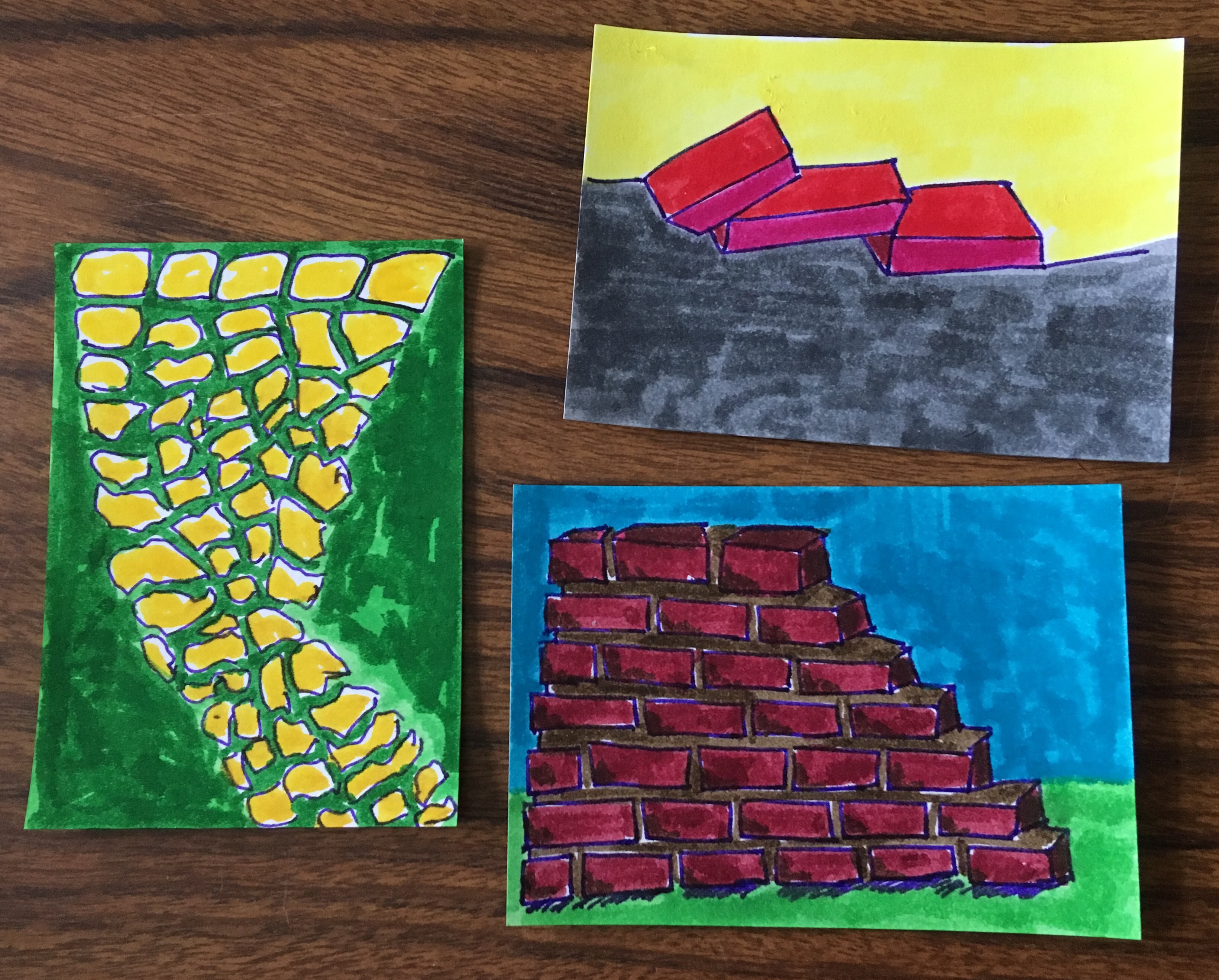
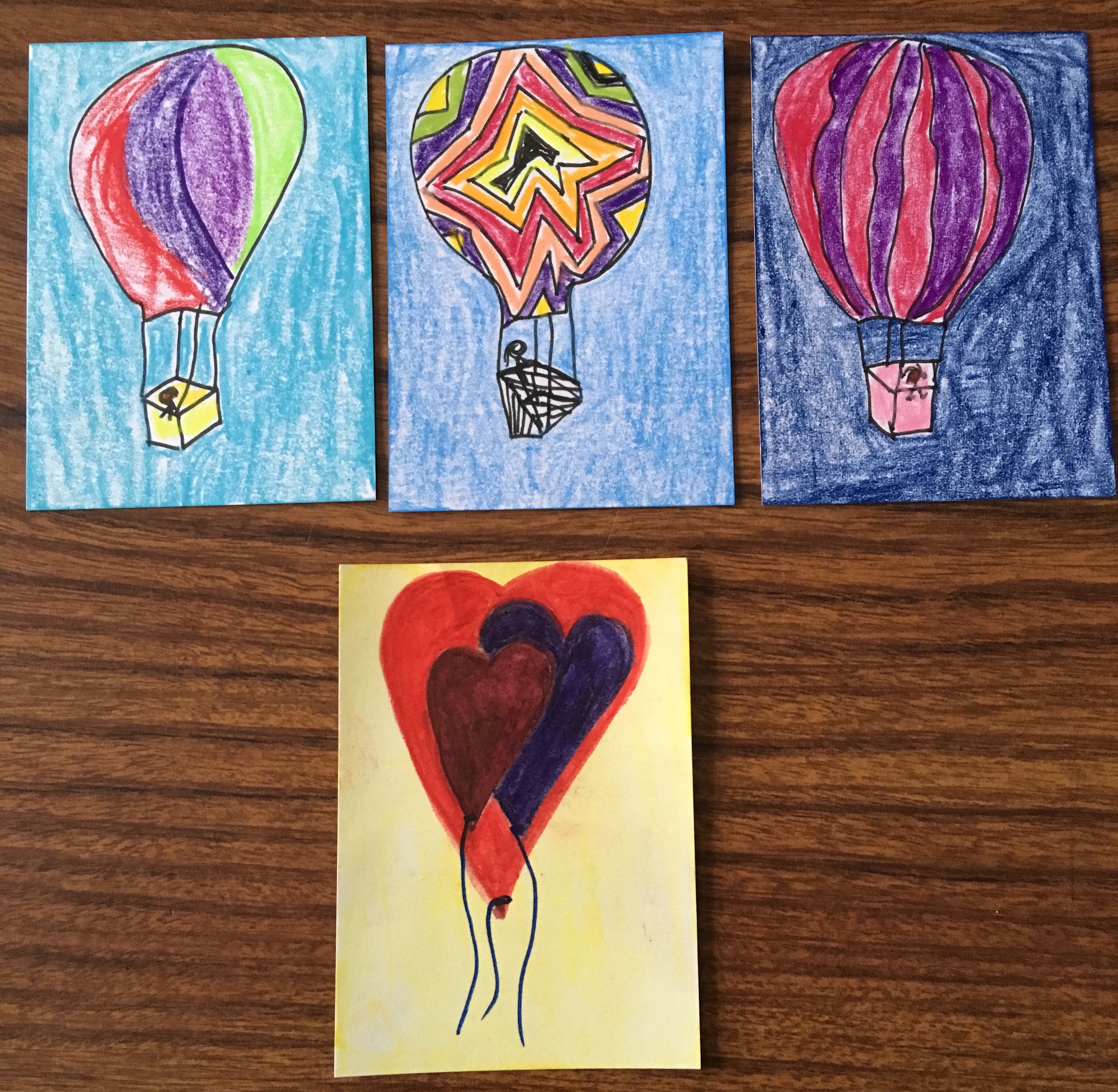
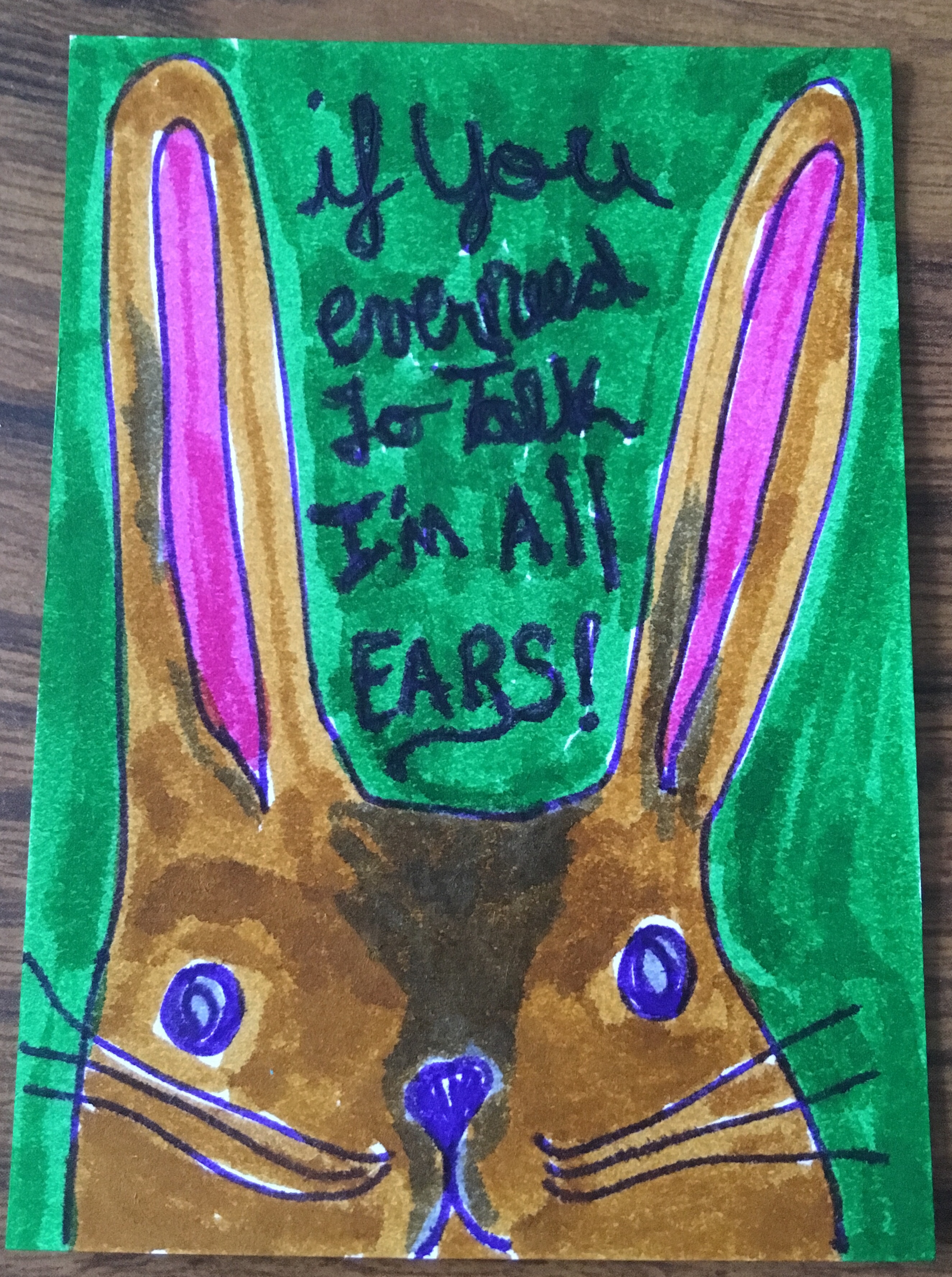
Artist trading cards are 2 1⁄2 by 3 1⁄2 inches (64 mm × 89 mm) in size, the same format as modern trading cards such as sports or game cards. They are self-made unique works or small series, signed and dated on the reverse by the artist/producer, exchanged and collected by other people.

Danny Gregory leads a weekly Draw With Me on YouTube, usually on Thursdays.
Danny Gregory is the author of a lot of best-selling books on creativity and drawing and he is also one of the co-founders of Sketchbook Skool. You can learn more about his work at dannygregory.com and dannygregorysblog.com.
There is no one way of drawing people. Every one has their own style, technique and way of seeing.
I am taking an online class at the Sketchbook Skool called People Drawing People to develop my skills. After that I can think about “style”.
The five week course features seven instructors, five of the demonstrating their ways of drawing people this week.
Week 1 focused on the basics: proportions, body language and posture. I drew the same models from video as the teachers and tried to copy their various styles.
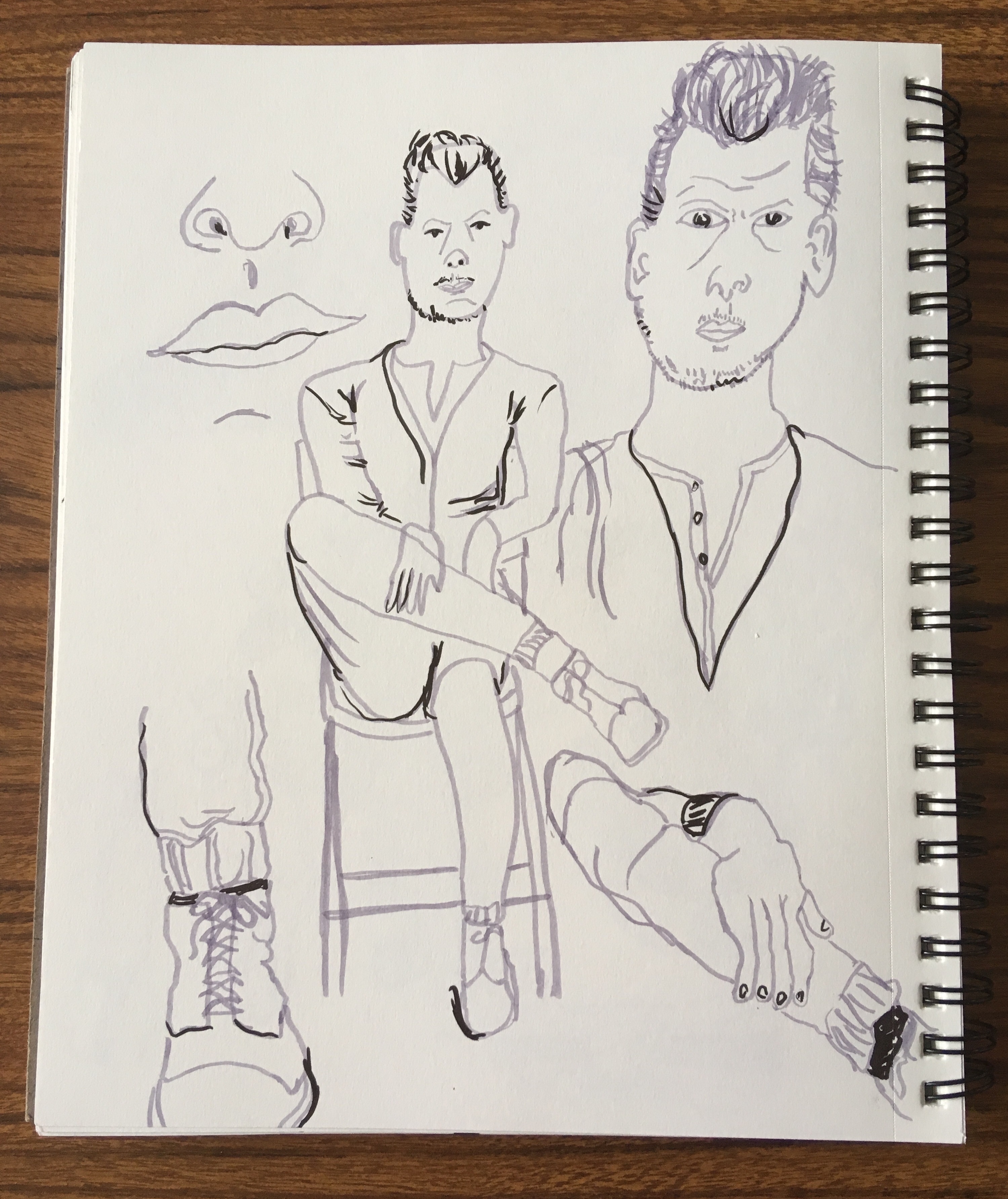
This is my Carlos Aponte style interpretation. He looks at shapes using a fat grey marker to block out his subject then refines it with a thin black marker.
Carlos Aponte is a fashion Illustrator and teaches at NY’s Fashion Institute of Technology. Check out his visual diary on instagram and his amazing fashion style artwork, also on instagram
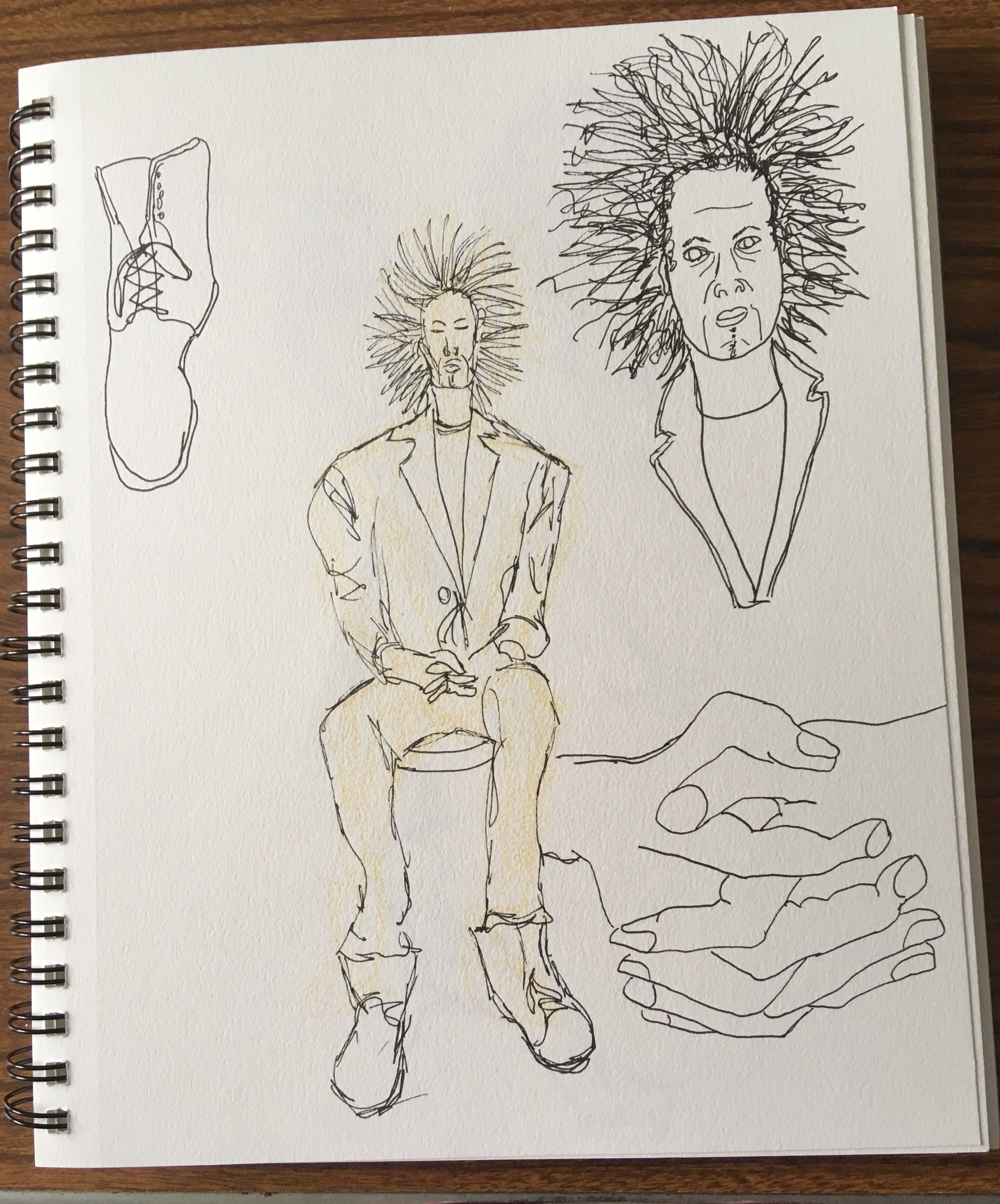
This my Felix Scheinberger style interpretation. He says details are not important and proportions are. He scribbles the shape with a light color of colored pencil and then draws his subject with a technical pen.
Felix Scheinberger is a German artist, illustrator, author and teacher. He’s written lots of best-selling books on drawing and watercoloring. Find his books and art on his website, and check out his Instagram.

This my Jason Das style interpretation. He measures before he starts marking out the top and bottom so that he fits the entire model and starts drawing lightly in the middle with a pencil.
Jason Das is a comic book artist and teacher at The New School and the former president of the worldwide Urban Sketchers. Find out more about him on his website and follow his sketch adventures on Instagram.
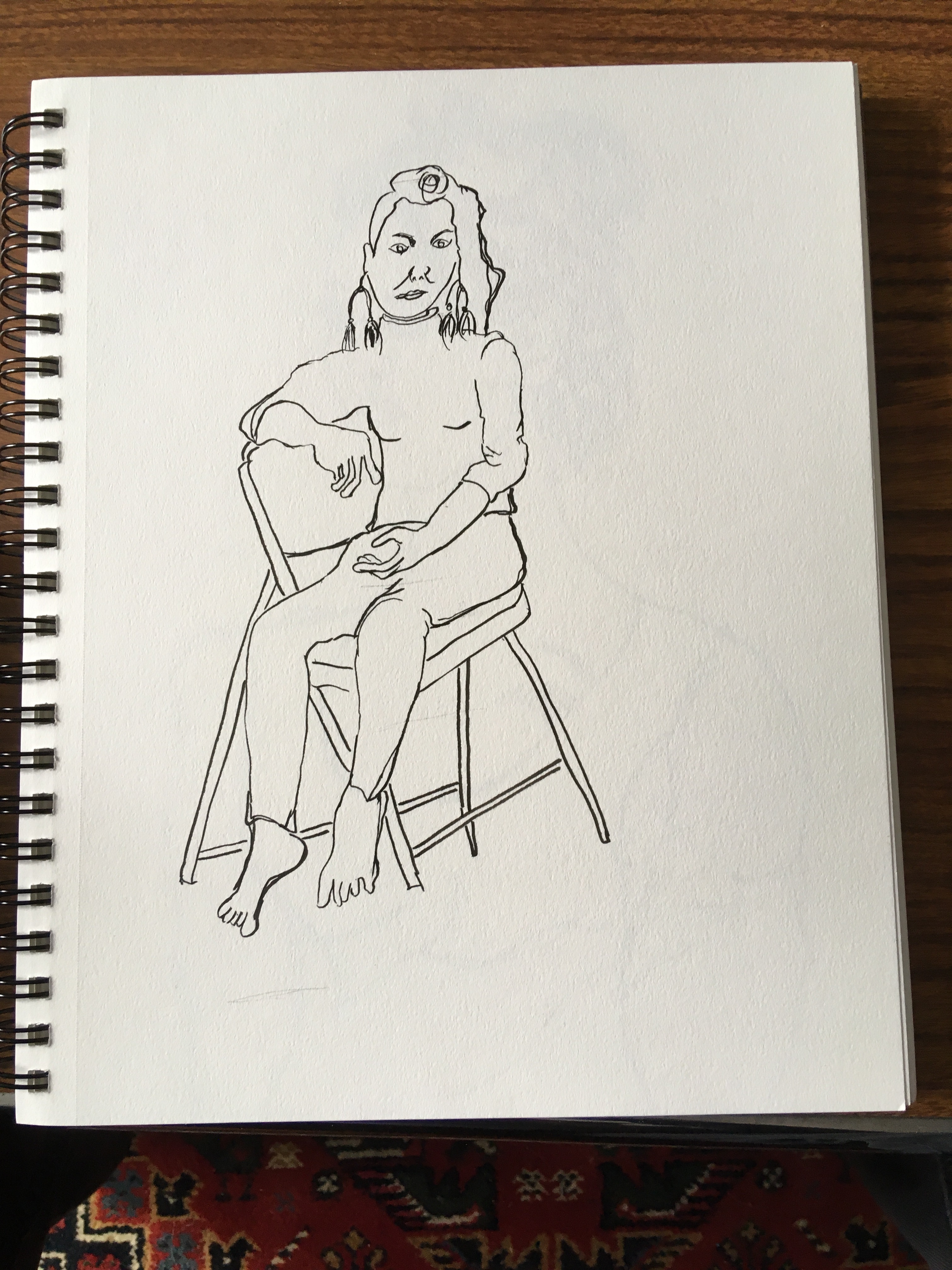
This is my Vin Ganapathy style interpretation. He starts with the head and uses a fine liner.
Vin Ganapathy is an Illustrator, specializing in portraits. He has a website with a lot of inspiring drawings too.

This is my Koosje Korne style interpretation. She maps out top, feet and middle of the model on her page and starts her drawing with the shoulder. She draws with a soft brush pen.
Koosje Koene, co-founder of Sketchbook Skool, is an avid sketcher and hosts the weekly YouTube series Draw Tip Tuesday. See more about Koosje on her website and see what she is up to on her Instagram.
These next three are my drawings of other video models from the class.


The other two artist teaching People Drawing People did not demo this week.
They are:
France Belleville van Stone is the author of Sketch! She also is one of the stars of the website Sktchy. Check out her website and follow her on Instagram.
Danny Gregory is the author of a lot of best-selling books on creativity and drawing and he is also one of the co-founders of Sketchbook Skool. You can learn more about his work at dannygregory.com and dannygregorysblog.com.

Ten hands to go to reach 100.
Robert Kaupelis in his book Experimental Drawing wrote, “To experience and extend both your appreciation of drawing and your ability to delineate form through the meaningful making of marks, for this first problem, I am going to ask you to begin with an old or modern master drawing. I believe that it is important to study, live with, and love master drawings as it is to participate in the actual experience of drawing.
…“Now for several days I’d like you to literally live with this drawing. You are to have an intimate affair with it. Carry it with you at all times. Let it be the first thing you look at in the morning and the last thing you look at before going to bed…
…“Living with a drawing in this fashion can be a most profound experience. Certainly you’ll come to know it better than any other drawing you’ve ever seen.”
I picked a painting to study January 2020, carried it with me every day, researched, and copied it.
Leonardo Da Vinci painted his Renaissance masterwork “Mona Lisa” sometime between 1503 and 1517.
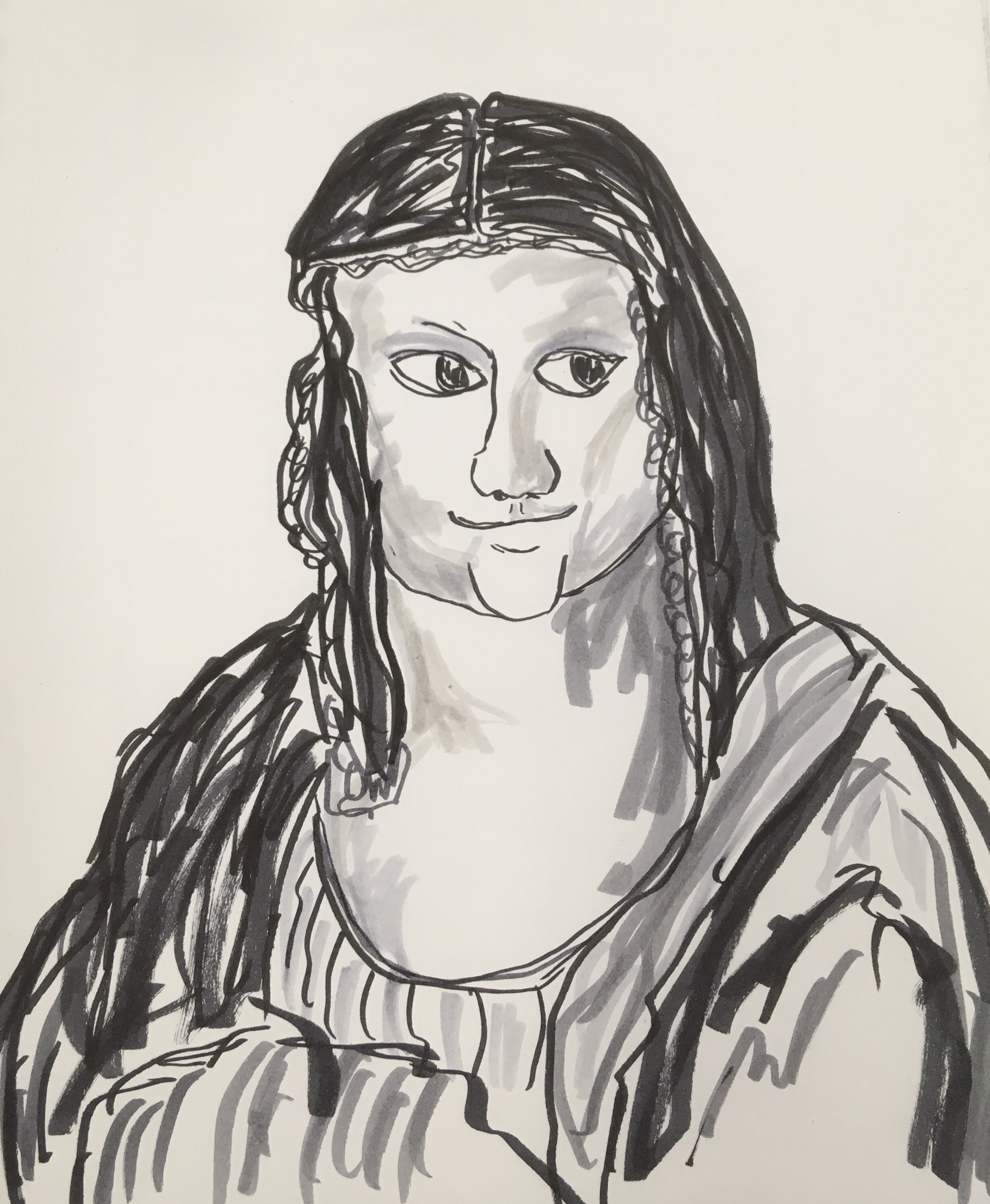
Mona Lisa — also know as ‘La Giocanda — is “the best known, the most visited, the most written about, the most sung about, the most parodied work of art in the world.”

The masterpiece, 30 x 20 7/8 inches, is painted on a poplar plank.

Some historians believe Mona Lisa is a self-portrait of Leonardo da Vinci.


The first Sketchbook School Draw With Me featured the Mona Lisa.
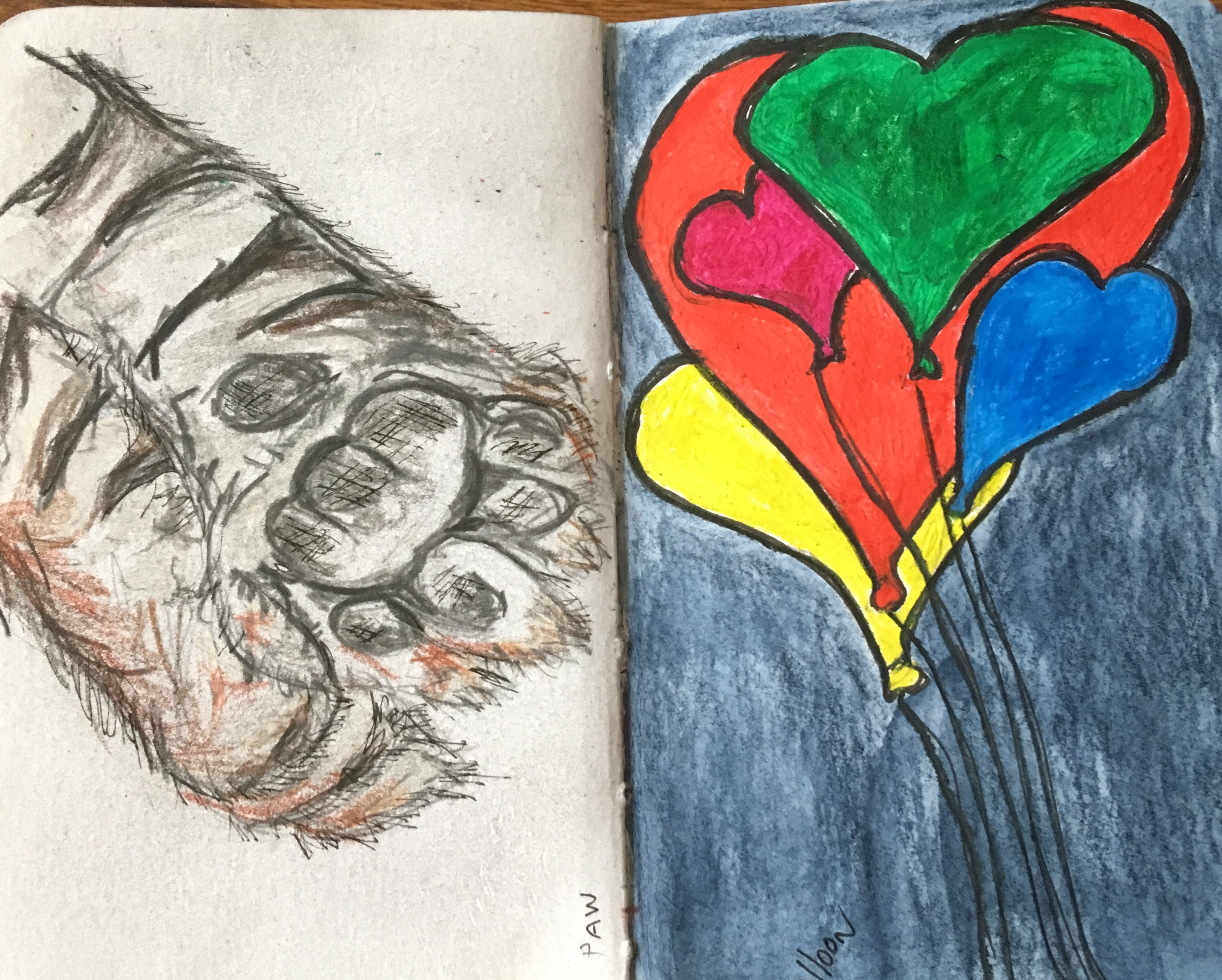
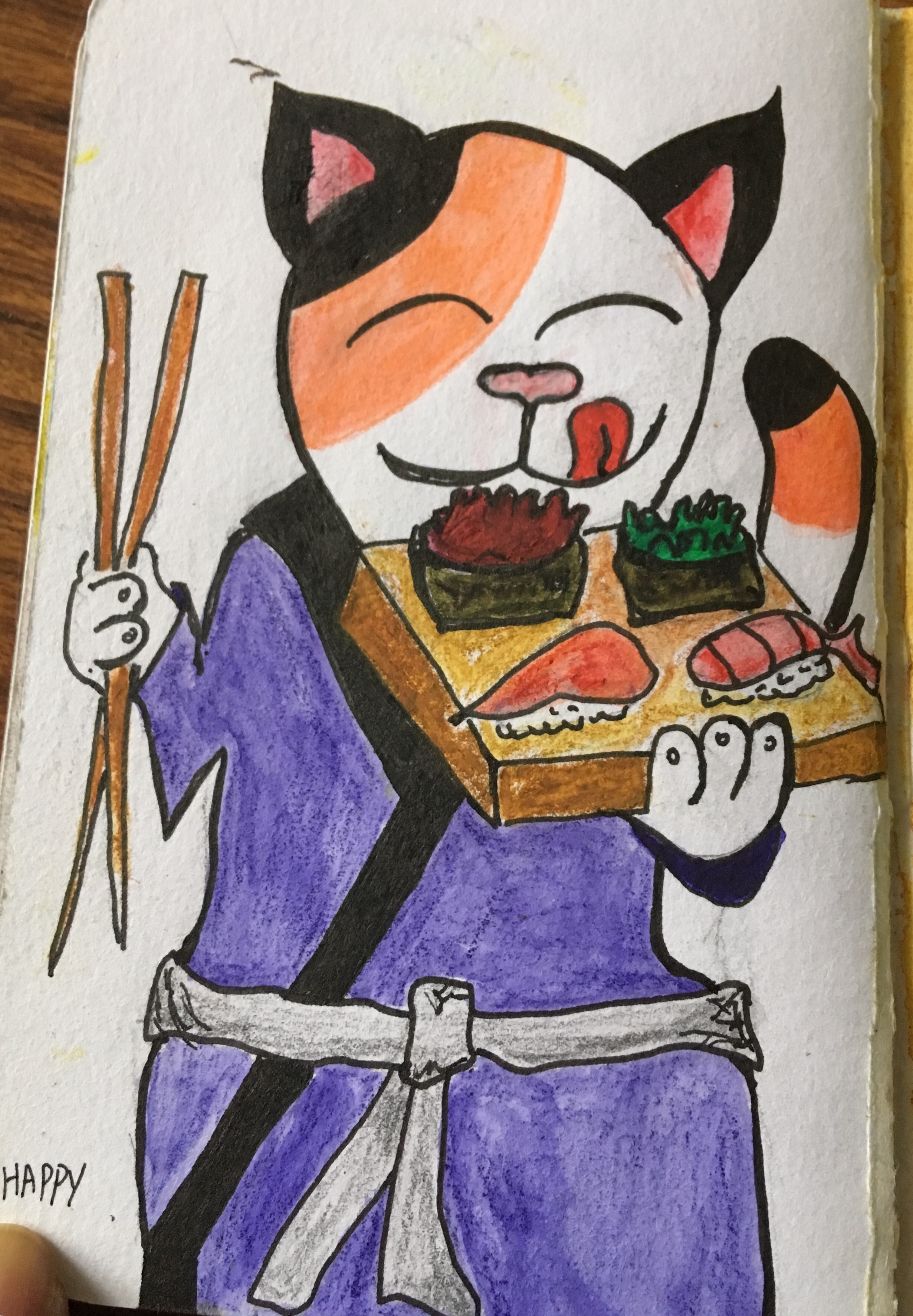
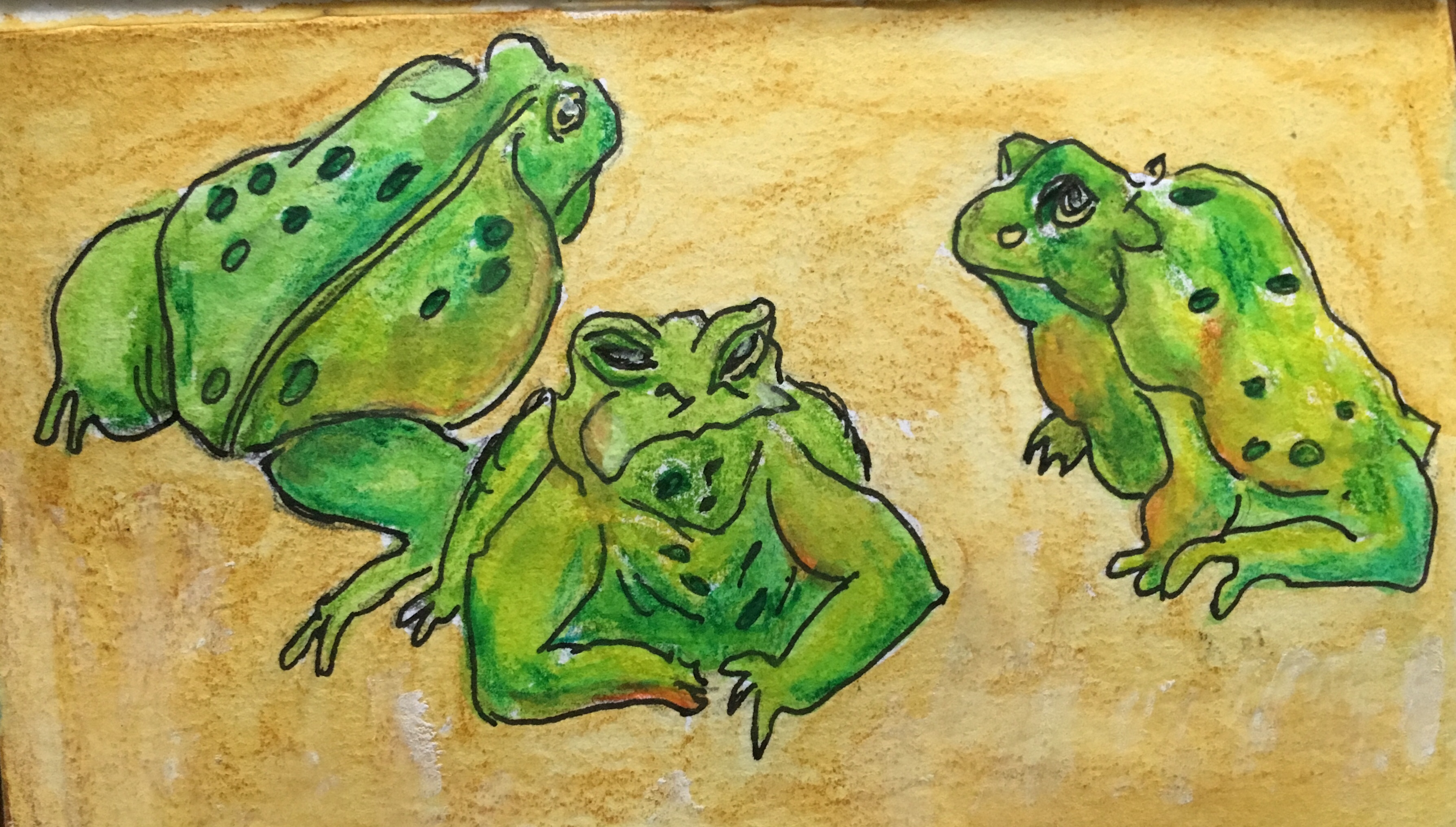
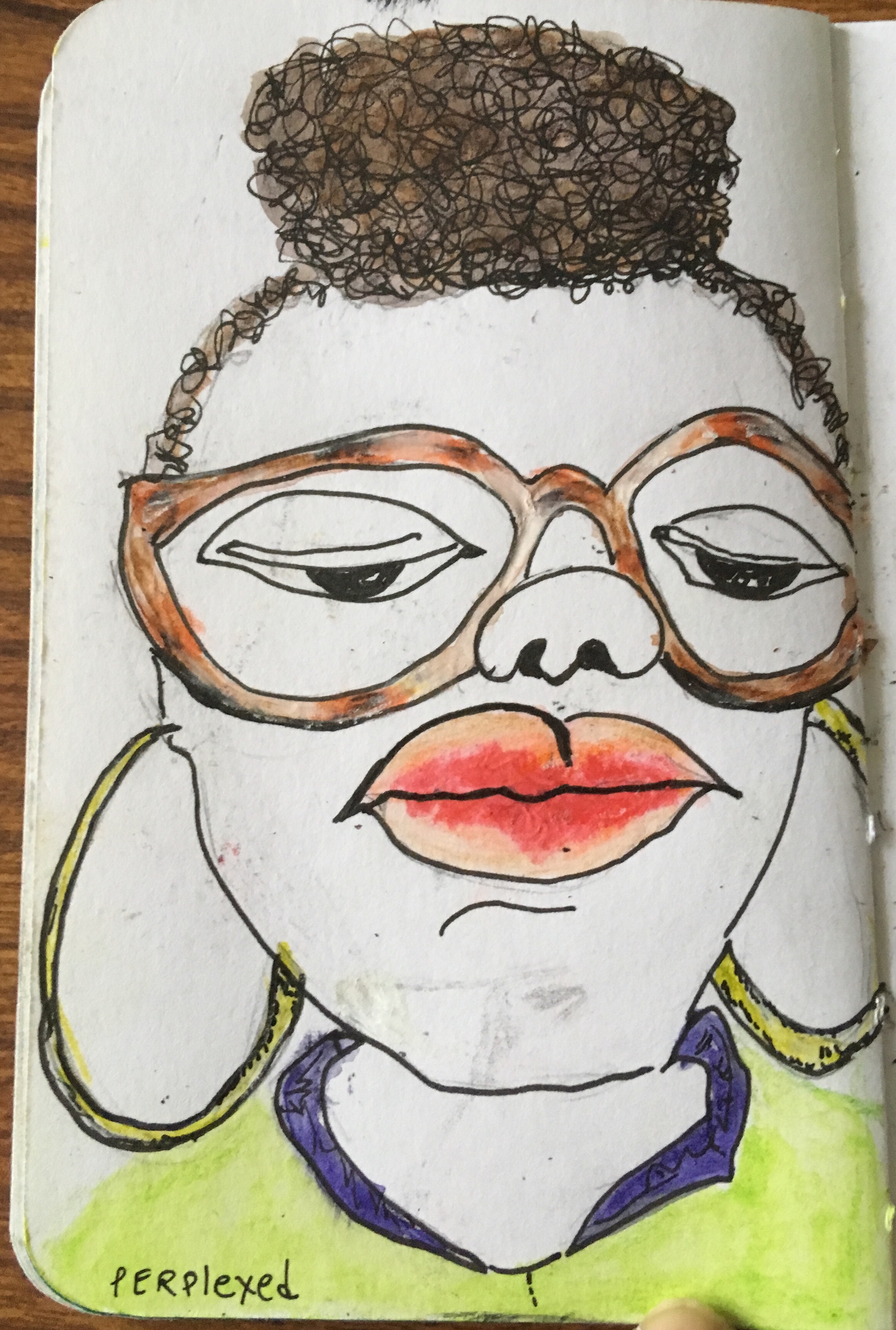
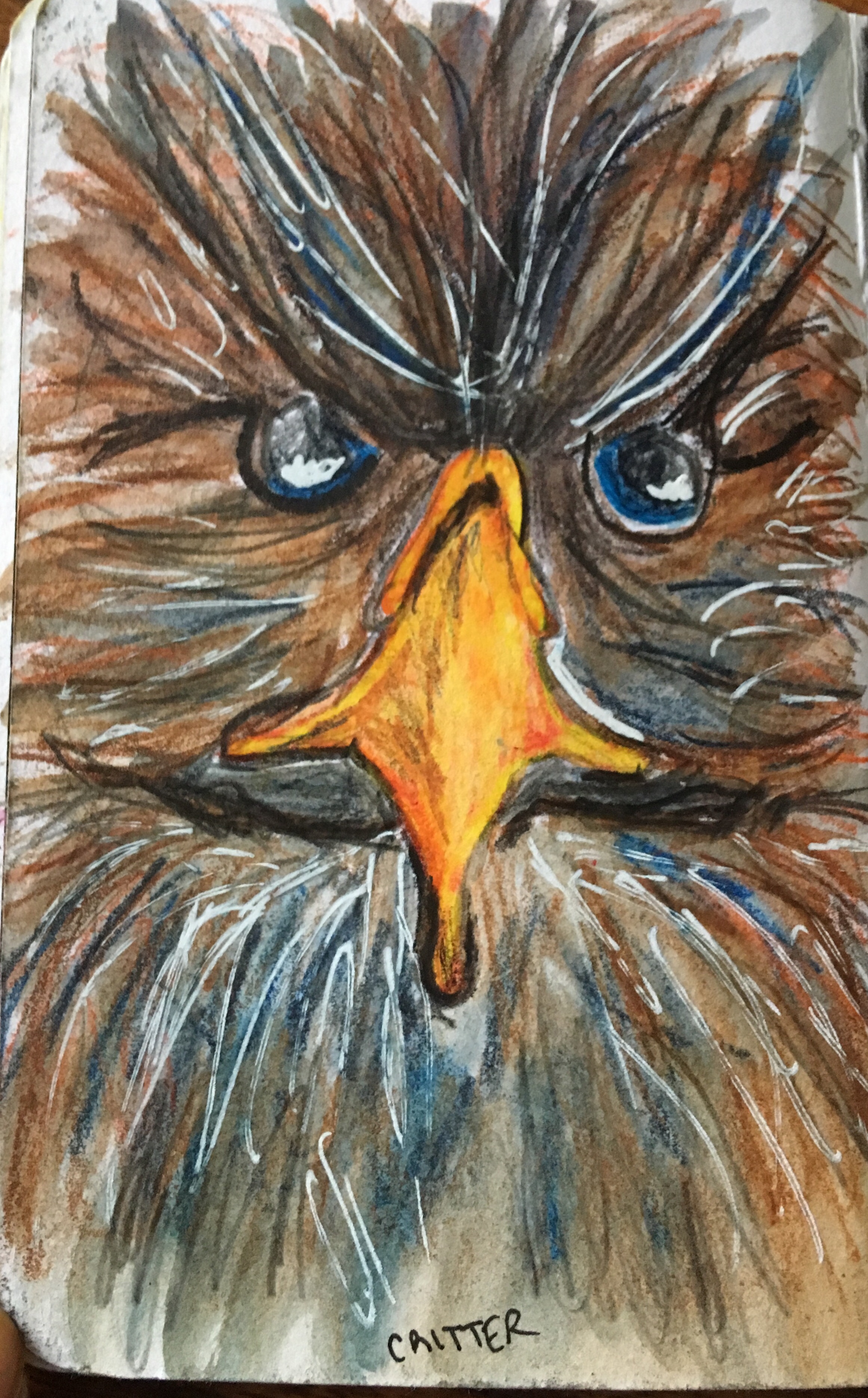
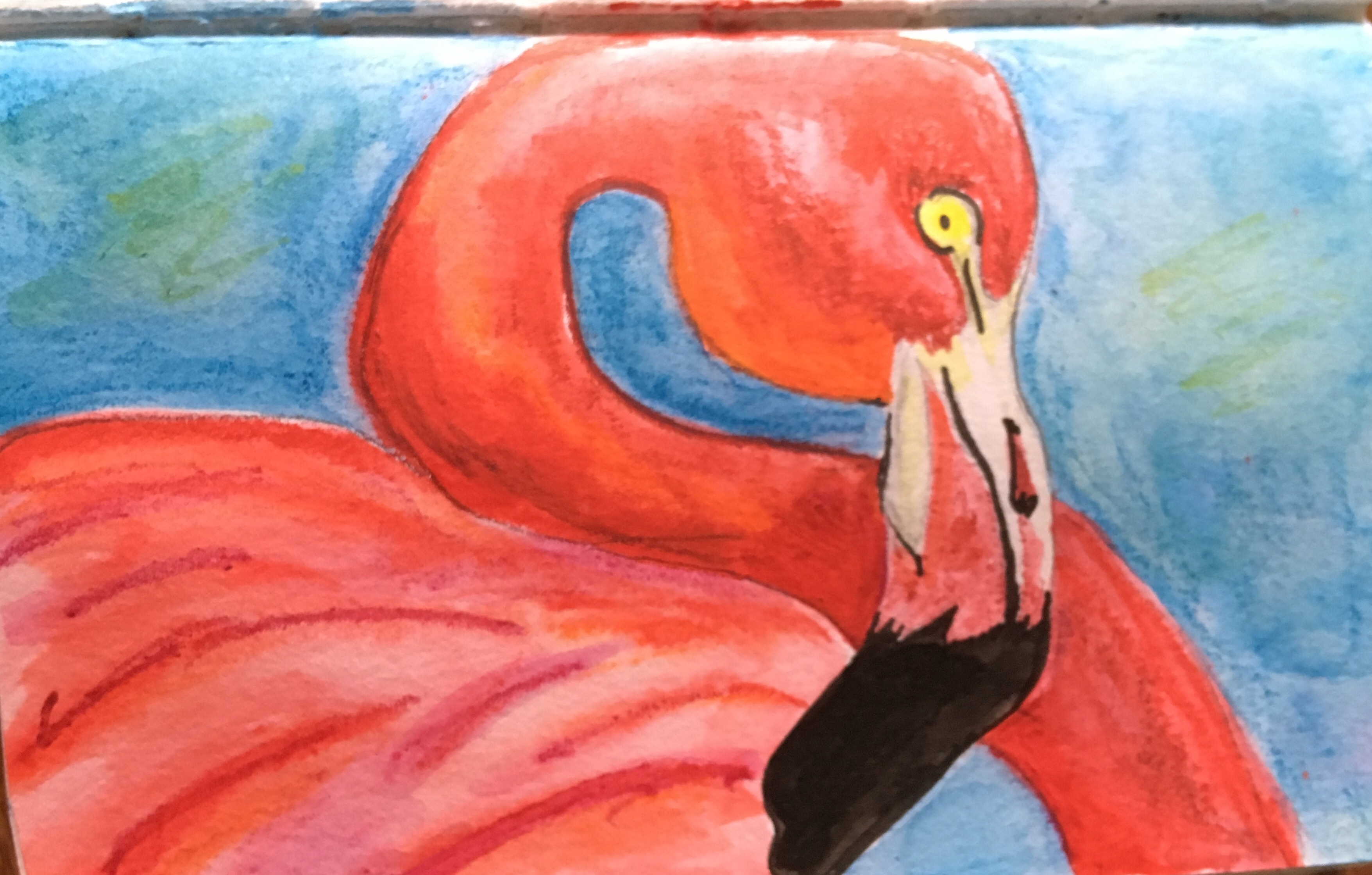
I found a pocket size watercolor sketchbook that I filled doing daily prompts in January 2018.
Here are some of the images that I like.






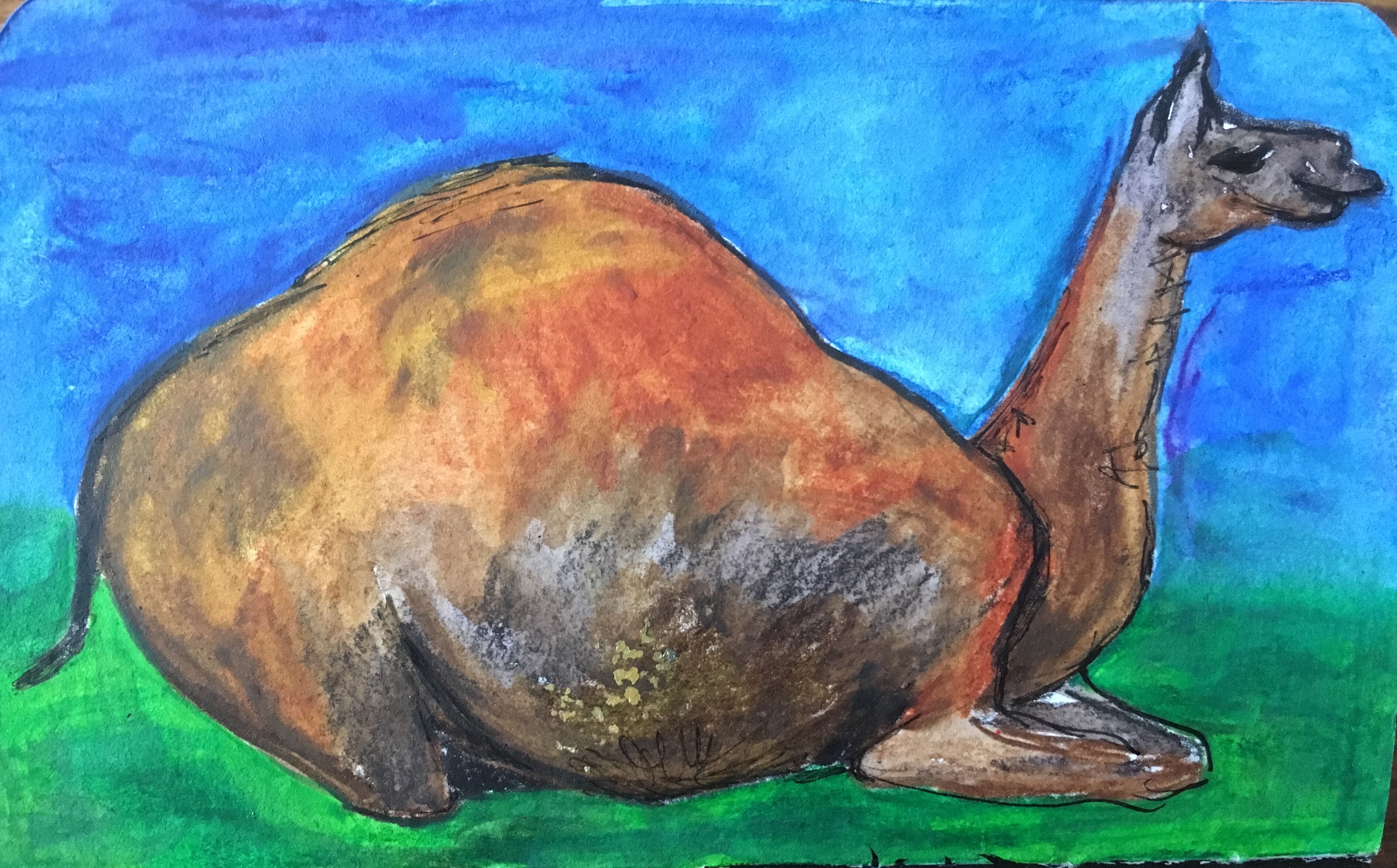
 Relentless Robin