March 03, 1991 ~ Los Angeles police beating of Rodney King was caught on tape.
March 03, 1819 ~ Congress created federal program to “civilize” Native Americans.
March 03, 1991 ~ Los Angeles police beating of Rodney King was caught on tape.
March 03, 1819 ~ Congress created federal program to “civilize” Native Americans.
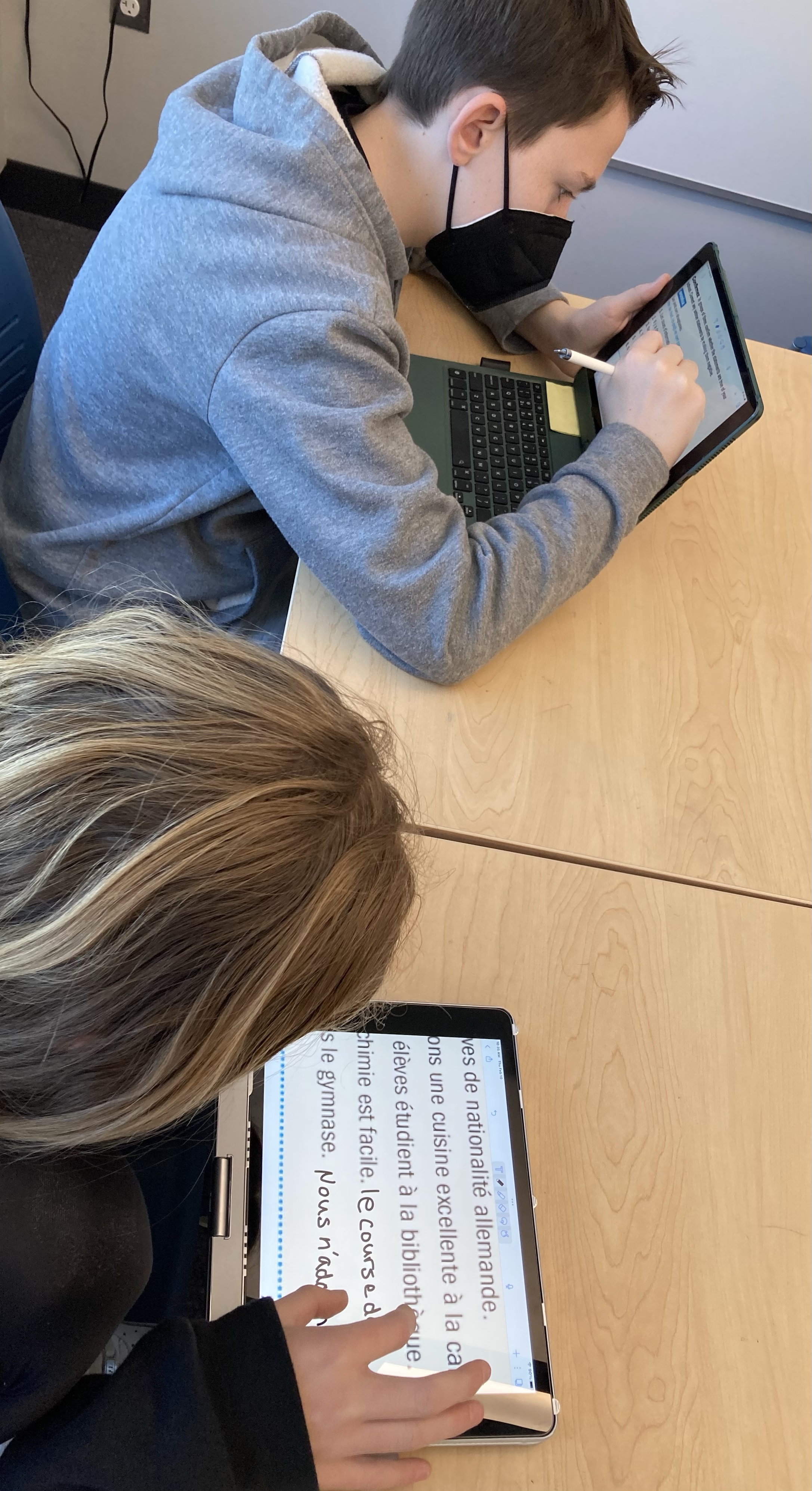
When I have time, I enjoy hanging in classes at the Rivers School, in Weston, MA. This is 6th grade Latin. All sixth grade students are required to take Latin 6.
This course uses the Cambridge Latin Course, Unit I, a text that offers a flexible, dynamic approach to studying Latin. From the outset, students work toward developing a basic reading knowledge of the language. By reading stories set in Pompeii, 79 AD, students learn about the Roman world in a coherent and credible fashion. Students acquire translation skills and a solid introduction to the culture and customs of the Romans.
They are exposed to basic forms and grammatical constructions, and to the grammatical forms and syntactical clauses common to both English and Latin. Vocabulary and derivative skills are emphasized throughout this course. Roman aqueduct system and water management, and the way water figures into Greek and Roman stories and myths, are also focuses of the class.
They complete several art projects during the year. The day I got to hangout, the students designed Greek vases based on mythology that they studied.
They were working from this handout:
Production notes: I shot this while subbing yesterday. The teacher came back before class ended so I shot about 3 minutes of video of her teaching (notice that she still has her coat on), made a couple of still photos and put it together in InShot. I wasn’t very happy with my still photo array so I went back to the classroom and took detail photos of a Greek vase example. I took my microphone out of my bag over the weekend to record a Vlog for civil rights class forgot to put it back in my backpack so I recorded the voiceover in voice memo on my iPhone using my earphones as a microphone.
March 2, 1807 ~ Congrss banned importation of enslaved people, effective January 1, 1808, but established no remedy for Africans illegally smuggled into the country after the enactment of the ban.
March 1, 1921 ~ Idaho bans marriage between Black and white people even though the state’s population is less than .02% African American.
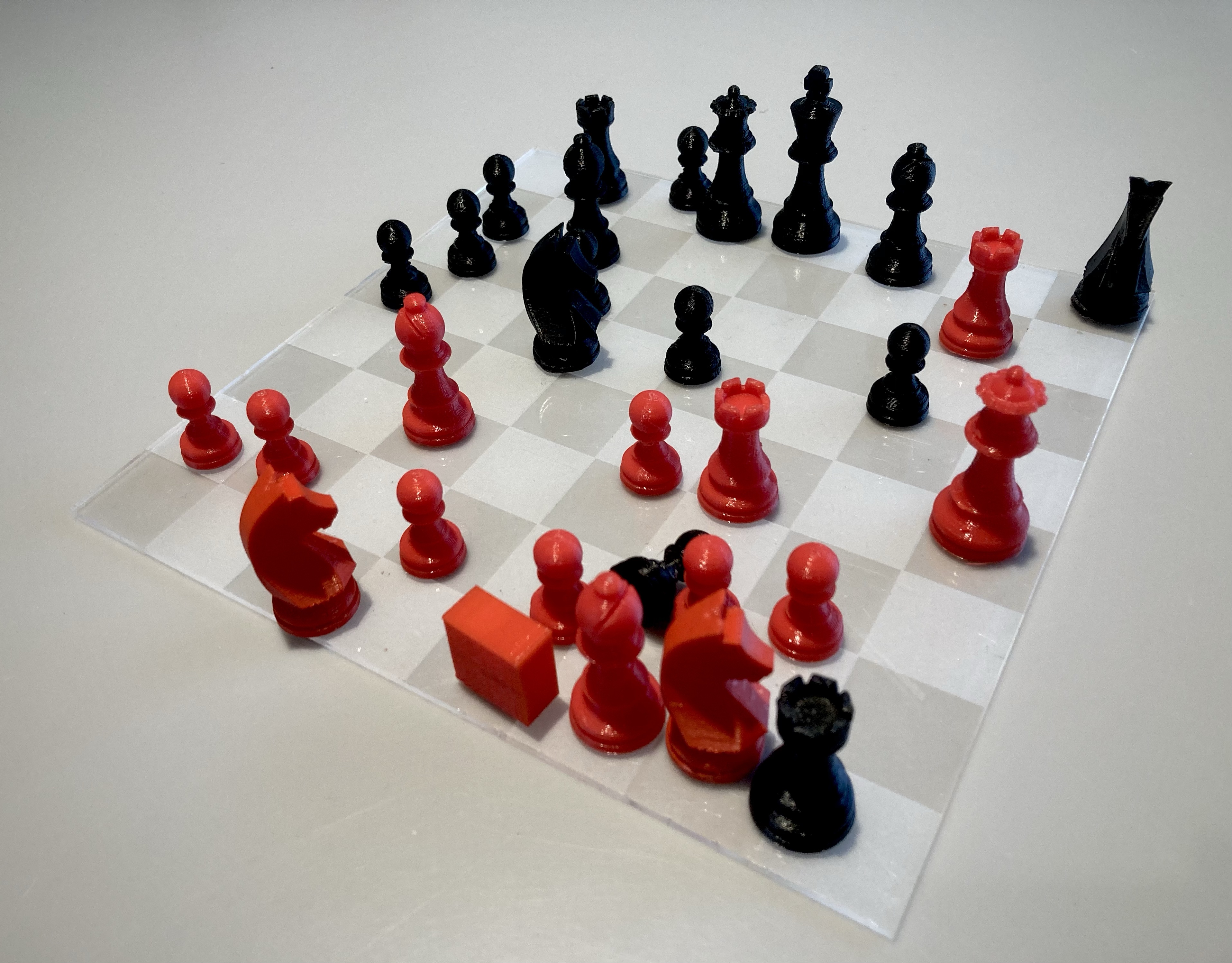

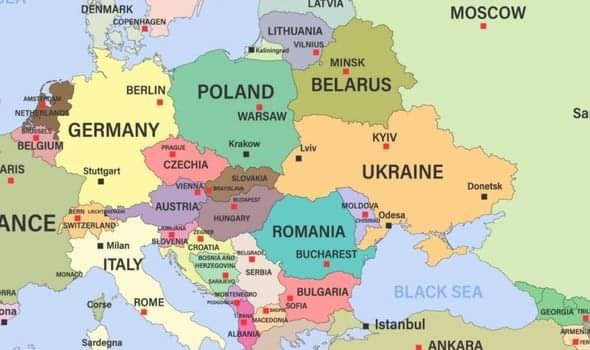

Blitzkrieg ~ [German: from Blitz ‘lightning’ + Krieg ‘war’] a military doctrine in which a surprise attack using a rapid, overwhelming force concentration that may consist of armored and motorized or mechanized infantry formations, together with close air support, has the intent to break through the opponent’s lines of defense, then dislocate the defenders, unbalance the enemy by making it difficult to respond to the continuously changing front, and defeat them in a decisive Vernichtungsschlacht: battle of annihilation.
disinformation vs misinformation ~ The difference is intent. Misinformation is “false information that is spread, regardless of intent to mislead.” If you are spreading around information that is wrong but you don’t know it is wrong, then you are, well, technically, spreading misinformation. Misinformation is first recorded in the late 1500s, and combines information with the prefix mis–, meaning “wrong” or “mistaken.” Disinformation is a relatively new word, first recorded in 1965–70. It’s a translation of the Russian word dezinformátsiya, in turn based on the French désinformer (“to misinform”). In English, the prefix dis- can be used to indicate a reversal or negative instance of the word that follows. Disinformation means “false information, as about a country’s military strength or plans, disseminated by a government or intelligence agency in a hostile act of tactical political subversion.” It is also used to mean “deliberately misleading or biased information; manipulated narrative or facts; propaganda.” Disinformation is knowingly spreading misinformation, is powerful, destructive, and divisive, and is a common tool of espionage and can be understood as “reverse information” or “anti-information” specifically created to deceive and misguide other people.
big lie ~a false statement of outrageous magnitude employed as a propaganda measure in the belief that a lesser falsehood would not be credible. (German: große Lüge) a gross distortion or misrepresentation of the truth, used especially as a propaganda technique. Constant repetition in many different media is necessary for the success of the big lie technique, as is a psychological motivation for the audience to believe the extreme assertions. The Nazis used it to turn long-standing antisemitism in Europe into mass murder. Tump’s “Big Lie”, a verifiably false assertion that he won 2020 presidential election, caused a violent mob to stormed the U.S. Capitol on Jan. 6, 2021.
Firehose of falsehood, or firehosing, is a propaganda technique in which a large number of messages are broadcast rapidly, repetitively, and continuously over multiple channels (such as news and social media) without regard for truth or consistency.
Pandemic, epidemic, and endemic ~A pandemic is a surge in cases of a particular illness that has spread to multiple parts of the world. An epidemic is a surge in cases that are confined to a smaller area, like a foodborne illness outbreak in a few states. By contrast, an endemic virus is simply one that’s a constant presence in a particular area of the world or in a particular population. The endemic level of a virus is its baseline or the amount of a particular disease that is usually present in a community. It’s not necessarily present at the ideal level, but it’s expected and somewhat predictable.
In a pandemic, there are waves of disease. Whereas when a disease is endemic, it follows, for example, a seasonal pattern like seen with influenza or some cold viruses.
intersectionality ~ the interconnected nature of social categorizations such as race, class, and gender as they apply to a given individual or group, regarded as creating overlapping and interdependent systems of discrimination or disadvantage. Intersectionality is the acknowledgement that everyone has their own unique experiences of discrimination and oppression. We must consider everything and anything that can marginalize people – gender, race, class, sexual orientation, physical ability, etc. Intersectionality provides a lens through which we can examine the processes, practices, policies, and structures that increase the risk of students experiencing disadvantage or discrimination because of their intersecting identities.
The Asch Conformity Experiments, exemplify the power a group of people can have over an individual’s decision-making, especially if the desire to be accepted by that group is strong.
“People rarely succeed unless they have fun in what they are doing.” —Dale Carnegie
– John Glenn
Habits of Mind classified into three domains: FEEL, THINK, DO. FEEL – persist and learn from failure, see themselves as problem solvers. THINK – envision multiple solutions, make evidence-based decisions. DO – communicate effectively, decompose problems, innovate process, methods and designs.

I must not fear. Fear is the mind-killer. Fear is the little-death that brings total obliteration. I will face my fear. I will permit it to pass over me and through me. And when it has gone past I will turn the inner eye to see its path. Where the fear has gone there will be nothing. Only I will remain.
Frank Herbert, Dune
The writing process reveals something of you to yourself; as the narrative evolves, the writer evolves too.
A tiny percent of a huge number is still a big number.
Make a plan to live a simpler life. Initiate a spending freeze. You can declutter and declutter and declutter, but you’ll never create a clutter-free home if you don’t change the way you’re bringing stuff in. To avoid decluttering again and again, you’ve got to stop allowing unnecessary items into your home from the start. Start to track your expenses. Get rid of monthly expenses that are not needed. Track your time by paying attention to how much time you are spending doing things.
A minimalist mindset involves becoming a more conscious consumer, emphasizing quality over quantity and experiences over things.
Naif ~ “naive” is the more usual spelling. a naive or inexperienced or ingenuous person.
ingenue. (or ingénue), newbie, tenderfoot, virgin.
agitprop ~ political (originally communist) propaganda, especially in art or literature. Agitprop refers to an intentional, vigorous promulgation of ideas.
oeuvre ~ the works of a painter, composer, or author regarded collectively. a work of art, music, or literature. derives from the Latin word opera, which is the plural of opus, meaning “work.”
schmaltzy ~ excessively sentimental.Yiddish original meaning is “rendered chicken fat,” or “melted fat,” first spelled shmalts. It comes from the Old High German smalz, “animal fat.”
smarmy ~ revealing or marked by a smug, ingratiating, or false earnestness
schnick-schnack ~ Schnickschnack m (genitive Schnickschnackes or Schnickschnacks, no plural) (colloquial, chiefly derogatory) bric-a-brac, knick-knack
trampeltier ~ German a clumsy oaf (camel)
The future is “fluctuating, vague and uncertain.” John Maynard Keynes
Nobody can save themselves, certainly not for ever, at the cost of anybody else.
Trope ~ a figurative or metaphorical use of a word or expression. Derived from the Greek word tropos, which means, ‘turn, direction, way,’ tropes are figures of speech that move the meaning of the text from literal to figurative. In the arts, a trope is simply a common convention in a particular medium. It refers to anything that gets used often enough to be recognized. … That’s all a trope is: a commonplace, recognizable plot element, theme, or visual cue that conveys something in the arts.
Amperage (or current) is the amount of electricity flowing from the battery to the connected device, while voltage is the amount of potential energy. Multiplying volts by amps gives you wattage, the measure of total power. Pass-through charging lets you charge devices connected to the battery, while the battery itself is also being charged.
snatch the pebble ~ (colloquial, idiomatic) To fully grasp the meaning of a concept or developed a skill to a high degree of proficiency, often that rivals some specific expert.
Metaverse ~ If the internet is two-dimensional—text and images on flat screens—think of the metaverse as three-dimensional and multi-sensory (including touch). The word “metaverse” was coined in Snow Crash, a 1992 novel by Neal Stephenson. The term “metaverse” has been used as a buzzword for promotion, and as a way to generate hype for public relations purposes by making vague claims for future projects.
People who feel appreciated will always do more than expected because appreciation is one of life’s greatest motivators.
I think it was the ability of the theater to communicate ideas and extol virtues that drew me to it. And also I was, and remain, fascinated by the idea of an audience as a community of people who gather willingly to bear witness. A novelist writes a novel and people read it. But reading is a solitary act. While it may elicit a varied and personal response, the communal nature of the audience is like having five hundred people read your novel and respond to it at the same time. I find that thrilling. ~ August Wilson
in medias res ~ into the middle of a narrative; without preamble.
“What’s the most important thing to you that you accomplished in February?
I made a “Day in the History of Racial Injustice” post every day. I completed every assignment for my civil rights class. I took black and white photos and made contact sheets! I have deep root cleaning done on my teeth.
What do I plan to get done by the end of March that will help me on my journey?”
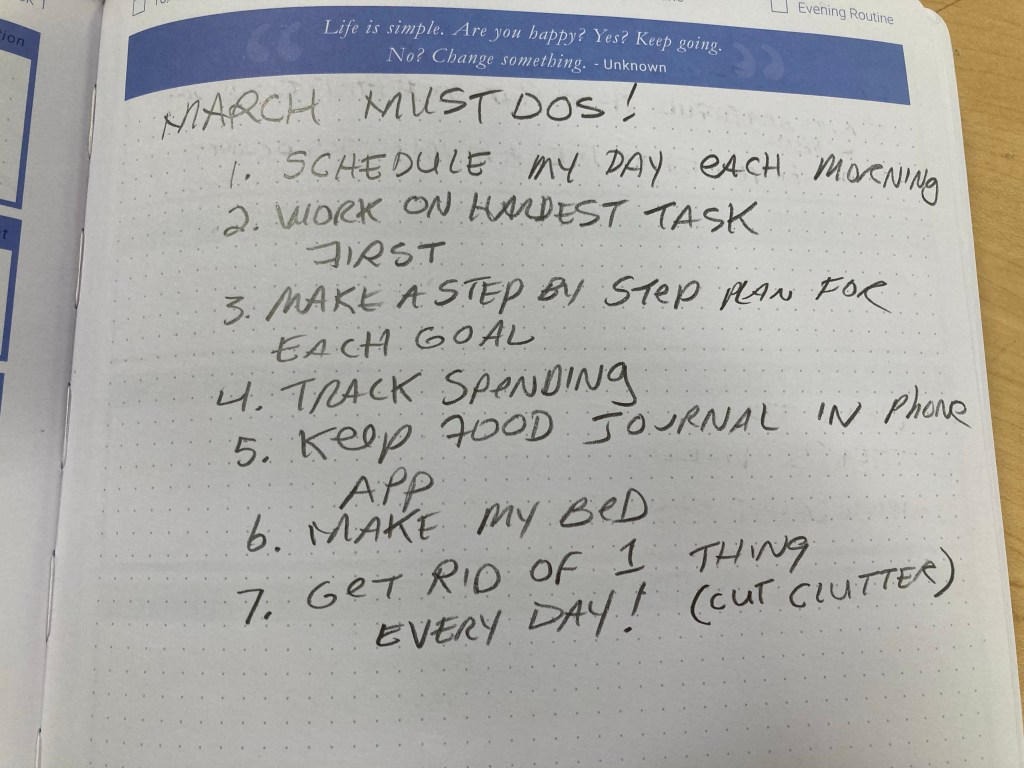
I will:
Schedule my day every morning.
Work on my hardest task first.
Make a step by step plan for each goal.
Track my spending, be 100% honest about my spending and put it in a spreadsheet.
Keep a food journal in a phone app.
Make my bed whether my wife is home or not. (I only make it now then she is home.)
Get rid of at least one thing a day.

February 28, 1942 ~ A mob of more than 1,000 white people riots outside public housing project in Detroit, Michigan, to prevent Black families from moving in.
When I subbed a Middle School Theater Arts class recently, the students played an improv game called “Mafia.”

Improvisation is the the ability to take existing pieces and put them together in a new combination for a purpose. Improvisation teaches students how to make decisions quickly, how to keep calm in a fast and emotional situation as well as how to think, act and feel simultaneously.
https://www.red-herring-games.com/how-to-play-mafia-great-team-building-mini-game/
improvise — 1 : to compose, recite, play, or sing extemporaneously. 2 : to make, invent, or arrange offhand 3 : to make or fabricate out of what is conveniently on hand
Improv teaches listening skills. Improv uses the technique ‘Yes, and….’ when responding to someone, which means you accept their idea, whatever it is and build on it rather than rejecting it. Improv is all about teamwork and is built on interactions between a pair or group of people. Students learn to work together to create something greater.
They learn ways to incorporate a variety of ideas into what they are doing. The practice helps kids learn to make eye contact, speak assertively, use polite language, and listen to others. Drama games gives students a safe space to practice using social skills, a difficult feat for many students who lack social skills, are shy, have social anxiety, or have simply had bad experiences in the past with social situations.
For some students, ‘failure’ is the real F-word. They want to be perfect at everything and when they aren’t their world starts to fall apart. In improv everyone fails sometimes. Sometimes things turn out strange, and everyone has a good laugh. A little failure is ok, and experience with failure teaches kids to embrace failure as a part of learning.

 Relentless Robin