I am better and better everyday.
I am grateful for the body I live in.
My body is healthier every day.
My health is always worth the sacrifice.
My body is healing right now.
I am enough.
I am better and better everyday.
I am grateful for the body I live in.
My body is healthier every day.
My health is always worth the sacrifice.
My body is healing right now.
I am enough.
Our adult kids visited for the holidays. The oldest gave all of us Magic starter decks.
Magic: The Gathering (colloquially known as Magic or MTG) is a tabletop collectible trading-card game created by Richard Garfield. Released in 1993 by Wizards of the Coast, Magic was the first trading card game. We played daily when they were small.


I read books to find relevant knowledge and absorb it. For Black History Month I am reading textbook on black history.
This textbook – Creating Black Americans: African-American History and Its Meanings, 1619 to the Present, by Nell Irvin Painter, is not part of the class syllabus but I think parts amplifies what we are covering in Civil Rights class.
The textbook views the Black experience in North American through the lens of art and culture. The book included African American art to illustrate the book. Each piece reflected on a historical event, important person, or feeling created by an African American artist to show black Americans as creators of their own history.
Preface
The textbook has 2 central themes – material conditions and meaning.
Material conditions relates to politics, economics, and demographics.
Meaning relates to the changing production of historical narrative in two ways: first, knowledge as a process, and, second, historical commemoration.
historical commemoration = holidays, monuments, museums
Black Americans – numerous, diverse, creative, personal history richly varied
Historical narrative: constructs a coherent story of the past that makes sense to us now by endowing certain people and events with importance while denying importance to others
Historical narratives changes over time based on the historian’s motive. The writing of history continues to evolve.
Before the civil rights revolution of the 1960’s Black americans were not seen by whites as american so history was the story of white america.
Visual artist view the past in personal, subjective terms
Black artists struggle with racism in the art world. Art school would not admit them. Galleries would not represent them. Museums do not see value in their work. Art history includes racial and gender discrimination
Until the 1920s Harlem Renaissance the art world did not consider black people as appropriate subject for fine art
Black artists depicting lynching = “this is meaningful; we need to pay attention to this.”
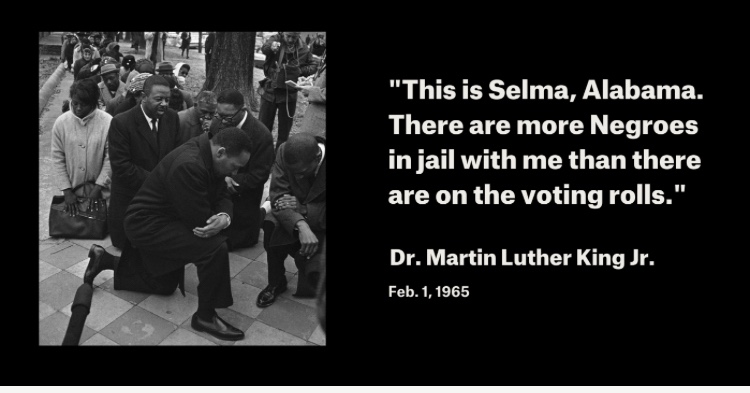
February 1, 1965 ~ Dr. Martin Luther King Jr. and more than 250 Martin Luther King Jr. led more than 250 activists to the Dallas County Courthouse in Selma, Alabama, to register to vote. All of them were arrested during the peaceful demonstration and charged with parading without a permit. In a letter written from the local jail that same night, and later published in the New York Times, Dr. King decried the racist conditions in Selma and observed that “there are more Negroes in jail with me than there are on the voting rolls.”

January 31, 1964 ~ Louis Allen, witnessed a murder of an NAACP activist by a white state legislator, was murdered in Mississippi.








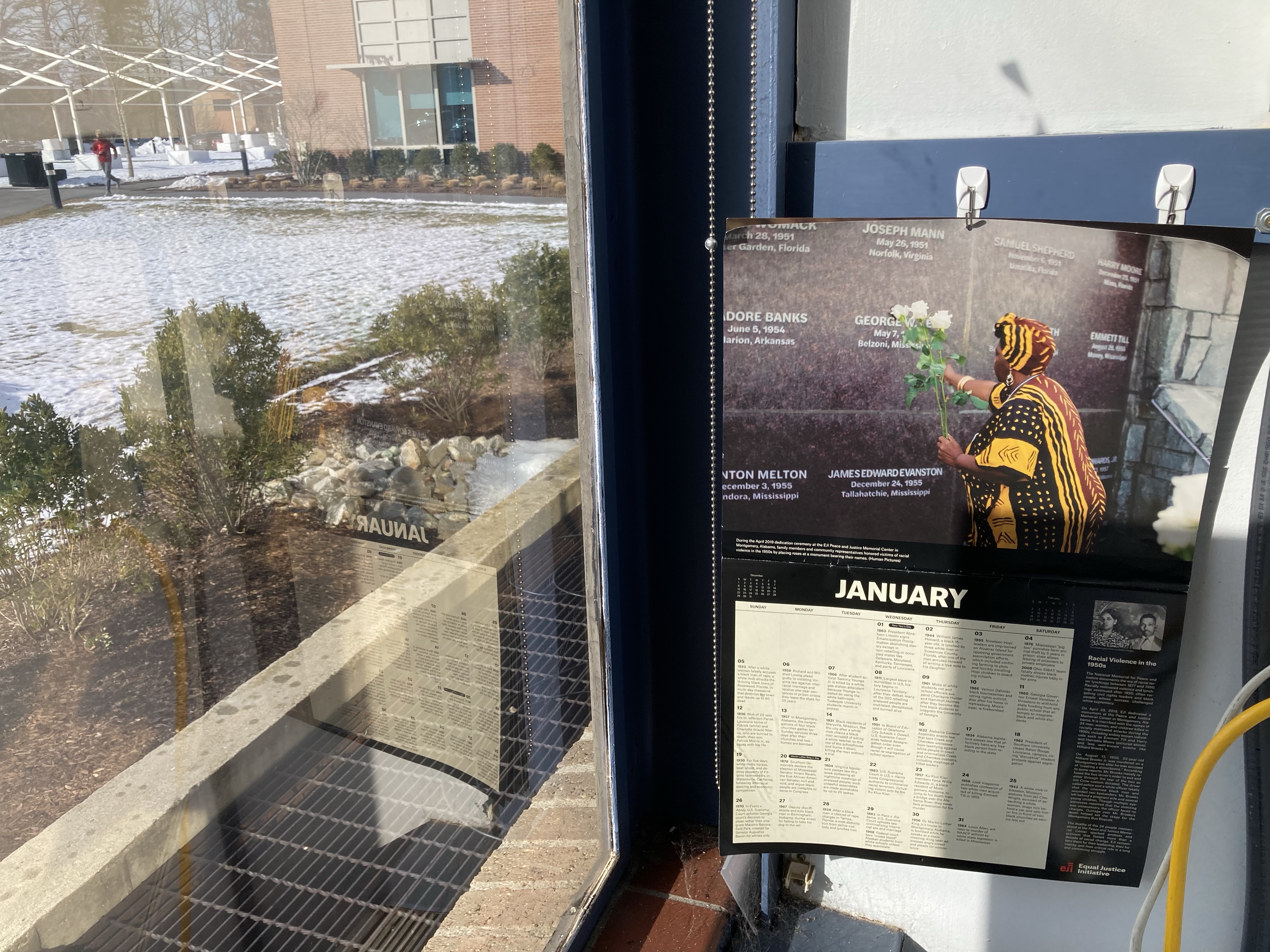








January 30, 1956 ~ Dr. Martin King Jr.’s house in Montgomery, Alabama, was bombed while he spoke at a mass a meeting; King later addressed an angry crowd and asked for nonviolence.


Much of our suffering comes from wrong perceptions. To remove that hurt, we have to remove our wrong perception.
Thích Nhất Hạnh (October 11, 1926–January 22, 2022)
From “Interbeing: Fourteen Guidelines for Engaged Buddhism,” Revised edition: Oct. 1993 by Thich Nhat Hanh, published by Parallax Press, Berkeley, California.
January 29, 1908 ~ Federal court bared “mixed blood” Alaskan students from white schools unless they assimilate.

January 29 1883 ~ In Pace v. Alabama, U. S. Supreme Court upheld law criminalizing interracial sex and marriage.
 Relentless Robin